Risks of investing in foreign jurisdictions – Turquoise Hill

There are a couple hot assets that are down in the upper-teens percentages today. One is Bitcoin, but I’ll let other financial scholars write about it.

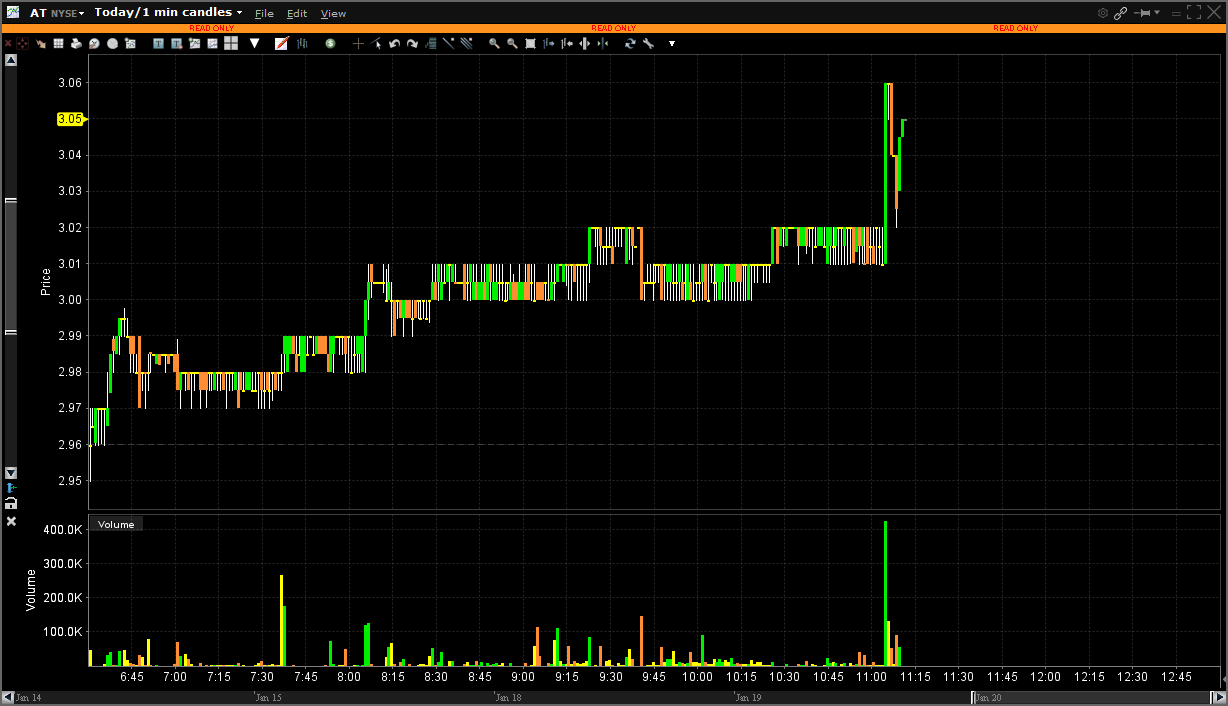
The other is equity in Turquoise Hill (TSX: TRQ), which is an entity that is 50.8% majority owned by Rio Tinto. The TRQ entity owns 65.9% of Oyu Tolgoi LLC, a Mongolian corporation that operates the Oyu Tolgoi mine, which currently is mining gold and copper. Copper represents the vast majority of revenues (roughly 75% in the 9 months ended 2020). While nominally Canadian, the primary operating entity is Mongolian and their operations are consolidated into TRQ’s financials. They report in US currency.

The company is facing significant issues concerning an ongoing dispute with the Mongolian Tax Authority, and also operational concerns regarding the expansion of their copper mine. While the GAAP financials are showing profitability, one quick look at the cash flow statement shows that the entity is (not using formal finance terms here) bleeding cash like crazy.

The first nine months of 2020, they spent $817 million on property, plant and equipment, and their net operating cash flow was negative $29 million.

At the end of September 2020, they reported $1.4 billion cash on the balance sheet, but this is offset with $4.2 billion in long-term debt, primarily consisting of a project finance facility:

They have another US$1.6 billion to draw out, but there are conditions regarding this which I won’t bother posting about here.

Last month there were news pieces about a tax dispute brewing, and today TRQ announced they are taking it to an international tax tribunal. It looks incredibly messy.

This post is not about a rigorous financial analysis about the viability of the copper mine expansion, but rather about the risk of investing in foreign jurisdictions – I know very little about Mongolia and it is very difficult to sort out how much of this is political, or false positive promises, or whatever. All I know is that an investment on the simple narrative of “Copper and Gold will go up, therefore I should invest in this” has been shown to have embedded risk that is very difficult to quantify, and quite likely the stock price was not pricing in correctly.

Also, in such majority-controlled situations, it is unlikely that the parent (Rio Tinto) will take actions that will give minority shareholders a fair shake. If there is a bailout in the works from the parent, it will be very extractive to the minority.

In my books, this is easily a stock that goes into the “too difficult” pile. But fascinating to study nonetheless.

ARK Innovation ETF

In the past month I have heard the ARK Innovation ETF (Nasdaq: ARKK) referenced more times than normal (previously I had not heard of this of this ETF at all), especially by what can politely be considered less than sophisticated retail investors, which piqued my interest.

It’s probably due to the fact that it is up 150% in 2020. The fund did have a peak-to-trough from February 2020 to March 2020 (during the COVID crisis) of 43%.

I’m guessing the logic goes – the fund was up big-time in 2020, so it’s clearly the best thing to invest in! Plus it invests in innovation, the hottest sector in the market! How can this go wrong?

We examine the holdings (snippet below are holdings over 1% in the fund):

This is like a laundry list of all the high-flyers. I’m surprised they don’t have a position in Bitcoin!

Momentum creates momentum – the demand will eventually peak out and then watch out below as the reverse happens.

A potential case scenario for lasting survivors will be something like what happened with Cisco Systems (Nasdaq: CSCO) – it flew in 2000 to be the highest capitalized company on the Nasdaq and traded at a P/E of over 100. The company fundamentally was sound, but the stock was horrifically overvalued. It crashed 75% over their March 2000 peak one year later. Fast forward to 2020, they are still around and making a ton of money – indeed, they are one of the saner-valued companies on the stock market, albeit they are no longer in a growth industry!

They are still about 40% below their March 2000 peak.

Going back to ARKK, it’s another soft data point about how bubbly the demand fever is for “innovation” stocks. 20 years ago it was called technology!

Late Night Finance with Sacha, Episode 10

Date: Wednesday January 6, 2021
Time: 8:00pm, Pacific Time
Duration: Projected 60 minutes.
Where: Zoom (Registration)

Frequently Asked Questions:

Q: What are you doing?
A: I’ll be commenting on my 2020 year-end report. I may consider questions and comments, time depending.

Q: How do I register?
A: Zoom link is here. I’ll need your city/province or state, and if you have any questions in advance just add it to the “Questions and Comments” part of the form. You’ll instantly receive the login to the Zoom channel.

Q: Are you trying to spam me, try to sell me garbage, etc. if I register?
A: If you register for this, I will not harvest your email or send you any solicitations. Also I am not using this to pump and dump any securities to you, although I will certainly offer opinions on what I see.

Q: Why do I have to register? I just want to be anonymous.
A: I’m curious who you are as well.

Q: If I register and don’t show up, will you be mad at me?
A: No.

Q: Will you (Sacha) be on video (i.e. this isn’t just an audio-only stream)?
A: Yes. You’ll get to see me, but the majority will be on “screen share” mode with my web browser and PDFs from SEDAR as I explain what’s going on in my mind as I present.

Q: Will I need to be on video?
A: I’d prefer it, and you are more than welcome to be in your pajamas. No judgements!

Q: Can I be a silent participant?
A: Yes. I might pick on some of you though. Bonus points if you can get your cat on camera.

Q: Is there an archive of the video I can watch later if I can’t make it?
A: No.

Q: Will there be a summary of the video?
A: A short summary will get added to the comments of this posting after the video.

Q: Will there be some other video presentation in the future?
A: Yes.

Happy New Year – FLIR Systems Acquired by Teledyne

A good way to start the new year is having one of your companies acquired.

FLIR Systems (Nasdaq: FLIR) was a recipient of a credible takeover offer. It was the first company on the S&P 500 that I made an investment in quite some time. FLIR is one of the smaller components of the index, with a market capitalization (before today) of about US$6 billion.

While I first wrote about it all the way back in 2011, I only bought shares in the company in 2020 during the COVID crisis. FLIR’s niche is in infrared imaging systems, but they have also expanded into military UAV operations. IR imaging technologies will continue to have great use in civilian and military applications.

Assuming the deal goes through, the investment will be about a 70% gain in the past 9 months.

The acquiring company is Teledyne (NYSE: TDY), another S&P 500 component which is a somewhat more diversified manufacturer of instruments and imaging equipment. Their imaging specialties in almost everything other than IR applications, including X-Ray, UV, but also long-band (microwave and RF). The acquisition is quite complimentary in nature and while I wasn’t initially thinking of Teledyne as being an acquirer, there is a certain amount of logic to the acquisition.

The offer was US$28 in cash and 0.0718 in TDY stock per FLIR share, which works out to a total of US$56 per share at TDY’s previous market value. The market does not appear to like the acquisition, however – TDY stock is down about 9% as of this writing, so the total value at present for FLIR holders, minus merger arbitrage, is about US$54/share.

Teledyne, before this acquisition, was relatively conservatively managed. In the past months of 2020, free cash flow was about US$330 million. They also announced preliminary 2020 results with GAAP earnings of about $10.30/share (US$380 million plus $32 million of restructuring, so FCF of ~US$412 million) and they also guided that the net debt position will be US$115 million (their Q3 balance sheet had approximately $450M cash, and $790M debt, so talk about good Q4 collections!).

The industry that Teledyne participates in is relatively stable. Probably the reason that their stock is trading down is because this is a relatively large acquisition in relation to their size, and the leverage on their balance sheet will bloat considerably from their historical norms. When adding FLIR’s earning power, the combined entity is still in relatively comfortable position.

FLIR’s most recent debt issue, an August 2030 unsecured bond with a 2.5% coupon, is still hovering around a 1.9% yield to maturity. The debt market appears unconcerned.

Looking at the Teledyne stock, my real quick paper napkin valuation has the combined TDY entity at around GAAP $12/share earnings, and on a US$358/share price, which gives it a current earnings of 30 times. With the leverage of an additional $4 billion in debt on the balance sheet, while this isn’t ridiculously high, it isn’t what you would consider cheap.

I’ll likely be selling at some point in the future when I’ve identified a better candidate for my USD. The half-exposure to TDY stock is acceptable for now. In the meantime, my current holdings of FLIR effectively is a happy capital parking position.