Contrarian indications – Energy

I noticed the following was the headline on the Drudge Report, who is amazingly good at fueling public sentiment on various issues on his simple, yet amazingly addictive page of links:
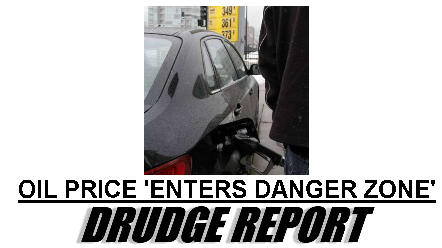
Although a single headline does not make markets move, it is something to be cautious about. The price of gasoline has not reached the mania level that it did back in 2008; however, it may reach that again in 2011.

I noticed while reading the latest financial pornography, mainly the five or so Canadian-related websites that attempt to sell advertising that they are having a “top four” stock contest. While these are purely for fun and have no bearing on reality unless if people invest real money in their convictions, I do notice that oil-related companies are starting to become about as prevalent as investing than gold-related companies.

Although in the long run I believe that the easy oil is gone, oil is still a cyclical market and is still bound by the economic constraints of how the marketplace works – with high capital costs, there are times where each individual company would see it rational to produce product above marginal cost but below fully burdened costs, leading to a situation where you have the underlying commodity trading below the fully burdened cost.

You see this happening today in the North American natural gas marketplace.

The contrarian pick would be to long natural gas and short oil, but this seems too obvious and too soon. One of the most dangerous aspects of investing is knowing when to exit the party, and an early departure to the party at this point will likely lead to plenty of gains being abandoned in the name of safety. When everybody runs for the exits, it will not be pretty.

However, if you’ve survived with your capital, you will be sitting pretty to pick up the capital-hungry entities that will be left standing and will receive a good risk/reward ratio for your patience.
Price of crude

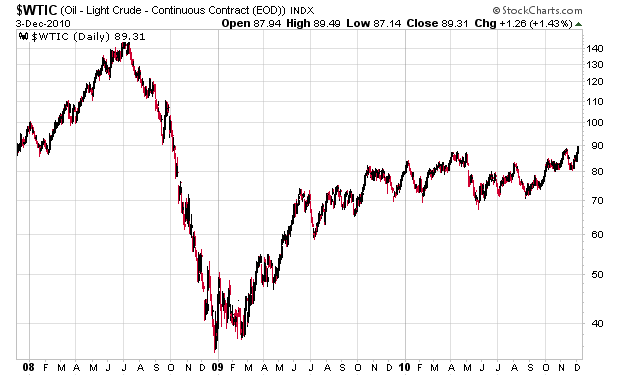
It is an important benchmark to see that the price of crude oil is at an all-time high, at least in nominal US dollar terms, since the economic crisis:

Every day when I look around me, I see people in their automobiles, and I see trucks on the road, and airplanes flying in the sky. While the sample of one is statistically insignificant, when you start to think about world-wide demand for concentrated portable energy (which is what crude oil represents), coupled with the increasingly high costs to mine supply, leads one to suspect that hedging their energy consumption in the form of owning energy assets would be a prudent portfolio decision.

This isn’t new – I have been discussing this for the past couple years. I believe in crude much more than gold in terms of hedging your purchasing power.

Large-cap oil sand companies like Suncor (TSX: SU) and Cenovus (TSX: CVE) are highly correlated to the price of crude oil. They also have significant bitumen reserves which become increasingly valuable as the price of crude rises. Due to the nature of the financial structure of these companies, they are not going to double overnight, but they will retain their value as long as you believe in the stability of the Canadian and Alberta governments.

Companies with oil assets outside “safe” jurisdictions (e.g. Venezuela) involve much more risk, hence you will find them cheaper.

There are also some other smaller cap companies in the oil sands space that are worthy of consideration, and they contain a bit more financial leverage which would result in potentially larger gains.

A very brief primer on Canada-US petroleum trade

The US Department of Energy releases a weekly bulletin on energy, and this week they chose to look at the Canadian energy exports to the USA, and the impact of a pipeline blockage.

The oil sands is a huge strategic advantage, especially as fossil fuel mining becomes progressively more difficult. In particular, transport fuels are going to face huge demand pressures as China and India continue their very high economic growth.

Technical analysis of gold

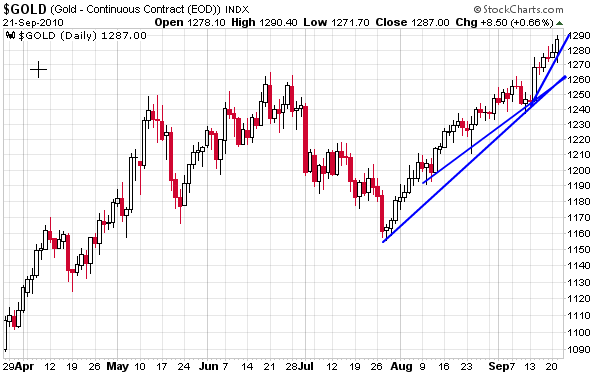
Here is a chart of spot gold prices over the past 6 months. I have added in three “trendlines” to the chart, which was a rough hack job:

For technical analysis fans, here are some questions:

1. Is it a foregone conclusion that gold will continue rising, or at least no lower than $1260, plus a few dollars each day?
2. If so, what is the proper trendline to use?

Technical analysis also suggests that if the trendline “breaks” that you can no longer assume the trendline exists, and that there is some other trend that is occurring. How do you figure this stuff out without using the chart as a retrospective explanation?

The only reason why I look at charts is a measure of sentiment over time, rather than trying to derive future prices from chart movement.

The Canadian Dollar see-saw

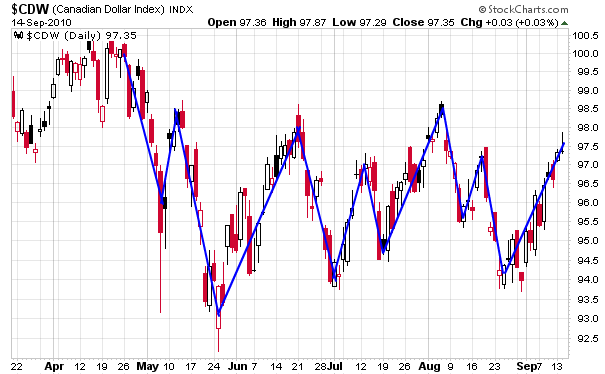
Attached is a chart of the last six months of trading of the Canadian dollar, relative to the US dollar:

One issue I have with technical trading is that in retrospect it is obvious there are “trends” and “momentum” factors as participants try to load up (or dump) the product in question, but when does the party end? Today? Tomorrow? Next week? How will you know the party ends? Right now, “sell at 98, buy at 95” seems to be the optimal algorithm. We will see if that’s the case or not.

Even though I’ve got exposure to both currencies, I will only be watching this from a distance. It’s very difficult to know whether the Canadian dollar is “fairly” valued or not – how do you even begin to construct a fundamental model? This is why a lot of currency traders are primarily technical – hop on the bandwagon, and hope others are still keeping the cart going before you dump your trade.