Genworth MI buying shares again

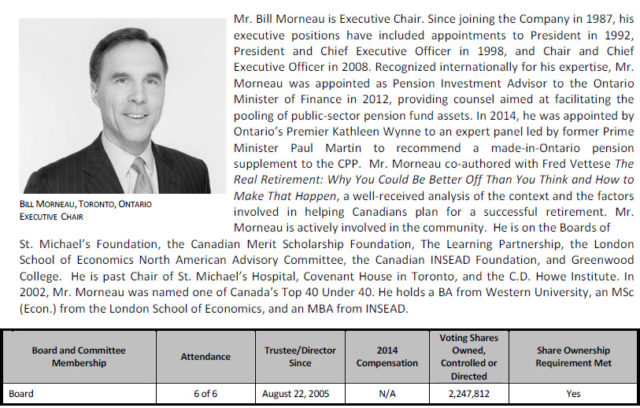
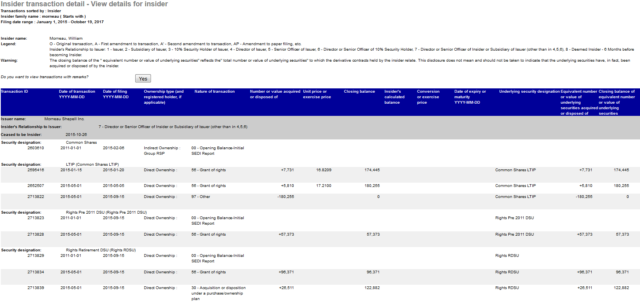
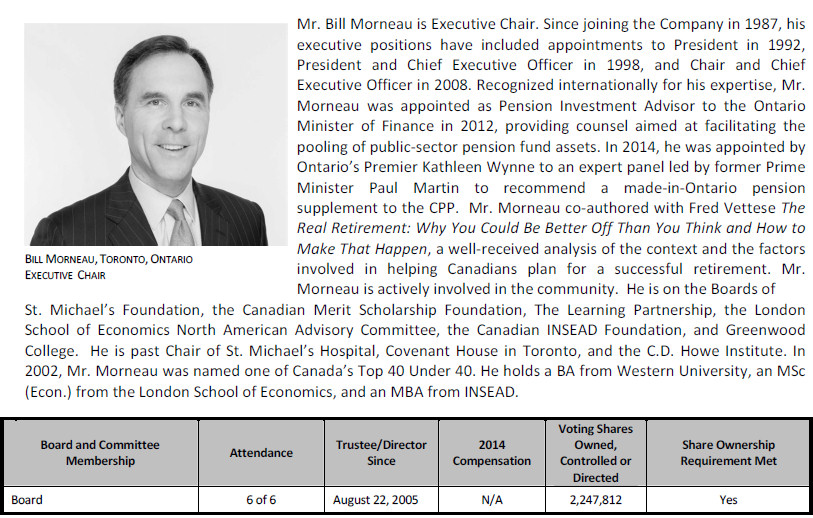
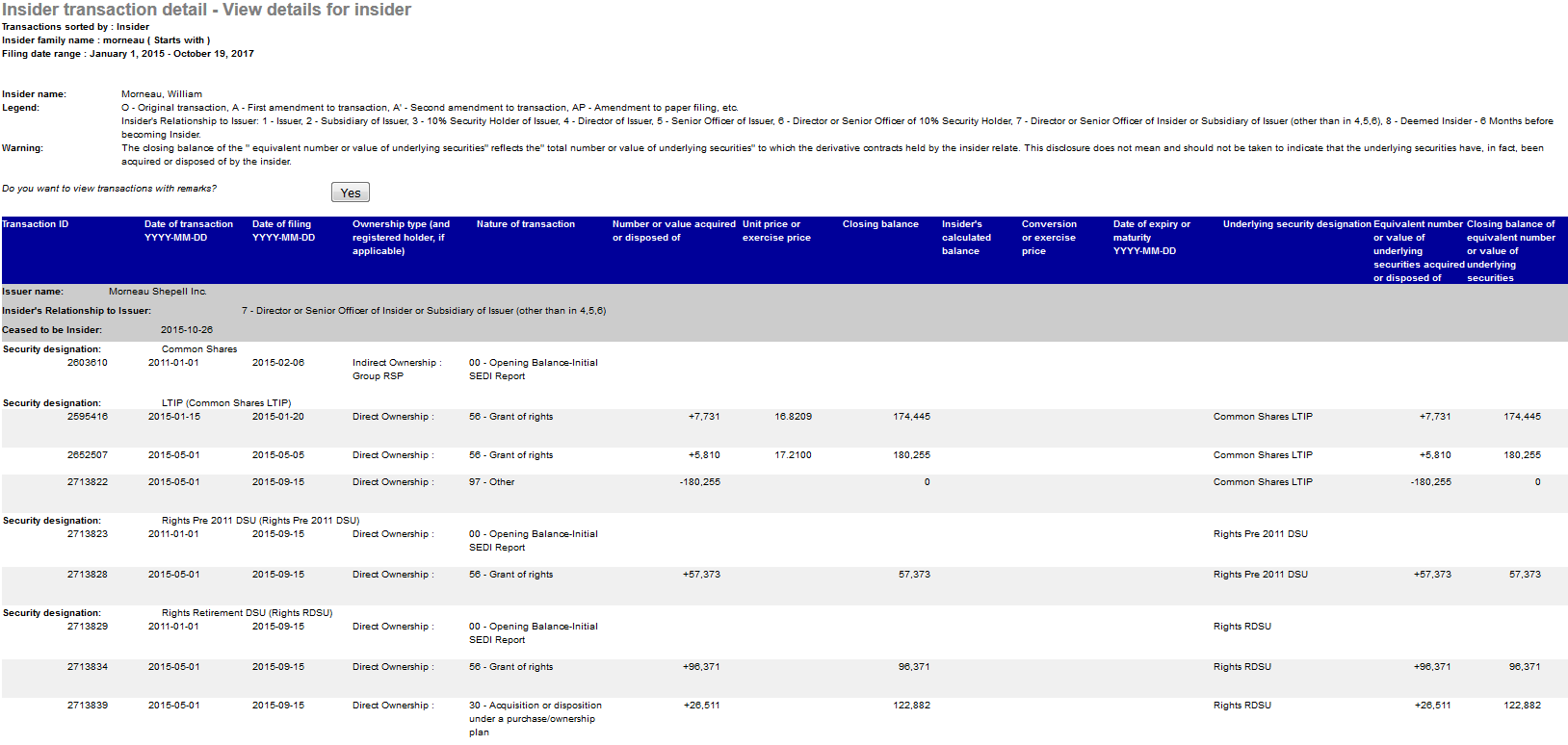
Genworth MI (TSX: MIC) filed with SEDI last week that they executed a share buyback in the month of August, purchasing approximately 913,000 shares at roughly CAD$36/share. This is nearly 1% of their shares outstanding. In light of the fact that they were making rumblings in filings a year ago with respect to the adverse consequences of increasing capital requirements with respect to the OSFI policy changes, this is most definitely a signal that they are now in an excess capital situation. The share buyback is at a discount of 13% to book value, so management cannot be accused of wasting value with this purchase (a rare characteristic that I very rarely seem managements of other companies perform when they conduct share buybacks).

Finally, Genworth MI traditionally increases its quarterly dividend rate in the third quarter announcement or announces a special dividend. The current regular quarterly dividend is likely to increase from 44 cents a share to around 47 or 48 cents. Management has a good track record of prioritizing buybacks when the share price is depressed to book or giving out special dividends when the share price is relatively high – I do not view a special dividend as being likely. Although my Genworth MI position is smaller than it used to be in the portfolio, it is a significant equity holding of mine and I see no reason to sell at this juncture, in absence of other opportunities.

Toys R’ Us – Looking back

Earlier in April, I said I was going to avoid Toys R’ Us unsecured debt. It was trading around 97 cents on the dollar at that time.

I looked at my quote screen today for lesser-attention securities and noticed they (October 2018 unsecured debt) was trading at around 56 cents on the dollar on reports that on September 6th, they decided to engage a bankruptcy firm to explore options. The bonds went down from 97 cents to 78 cents in a day, and they’ve straight-lined to their present trading price (53 cents and dropping as I write this) a week later.

I ask myself from the perspective of credit analysis – is there any hope for unsecured holders? The easy answer here is going to be no – I count at least $3.5 billion that is either “secured” or asset/real estate based loans out of a total of $5.2 billion in debt. Although their credit facility is about half-tapped (i.e. they’ve got time to structure a restructuring), I find it unlikely that they’re going to wait around until October 2018 and pay off that particular unsecured issue. The advantage of going into Chapter 11 prematurely is simple – they can offer the unsecured creditors (lease landlords, etc.) an unfavourable “take it or leave it” type deal (see yesterday’s post on Seadrill), be able to shed their high-cost items (including conversion of their unsecured debt into a token amount of equity) and move on with life.

There is one reason, however, why this may not happen:

Although Toys R’ Us equity is not traded on an exchange, it is a publicly reporting entity. Bain Capital owns 32.5% of the corporation. Are they willing to give up this equity? I’m guessing their own private valuation of the entire firm is small in relation to the amount of debt that would have to be paid back (if Bain wishes to keep control).

Also if Bain controls most of the secured debt, their interests lie with Chapter 11 instead of keeping control of the firm (via their 32.5% equity stake).

I find this one difficult to judge, but I would weigh on the side of a restructuring that will involve a material impairment of value to unsecured bondholders. There’s just simply too much secured debt and I do not think they will hold Chapter 11 back a year and a month just to pay the US$208 million that’s due with this specific obligation (there are too many others that will be due as well). This is especially true considering the overall entity is not producing a lot of cash.

All in all, I’m glad I avoided this instead of reaching for yield and getting burnt (which would be the only explanation why somebody would have invested in Toys R’ Us unsecured debt in the first place).

Seadrill Chapter 11 details

Seadrill, a publicly traded company that does offshore oil drilling, filed a Chapter 11 arrangement. The salient terms of the pre-packaged deal are:

The chapter 11 plan of reorganization contemplated by the RSA provides the following distributions, assuming general unsecured creditors accept the plan:

• purchasers of the new secured notes will receive 57.5% of the new Seadrill equity, subject to dilution by the primary structuring fee and an employee incentive plan;
• purchasers of the new Seadrill equity will receive 25% of the new Seadrill equity, subject to dilution by the primary structuring fee and an employee incentive plan;
• general unsecured creditors of Seadrill, NADL, and Sevan, which includes Seadrill and NADL bondholders, will receive their pro rata share of 15% of the new Seadrill common stock, subject to dilution by the primary structuring fee and an employee incentive plan, plus certain eligible unsecured creditors will receive the right to participate pro rata in $85 million of the new secured notes and $25 million of the new equity, provided that general unsecured creditors vote to accept the plan; and
• holders of Seadrill common stock will receive 2% of the new Seadrill equity, subject to dilution by the primary structuring fee and an employee incentive plan, provided that general unsecured creditors vote to accept the plan.

This is one of those strange instances where the common stock was trading like something terrible was going to happen, but in relation to its closing price Monday, they received a relatively good “reward” out of this process, 2% of the company (compared to zero if creditors take this to court).

The question is whether the unsecured debtholders will agree to this arrangement – my paper napkin calculation suggests that bondholders will get about 10 cents on the dollar (probably less after the “subject to dilution” is factored in) compared to the trading around the 25 cent level before this announcement.

Their alternative is that if they vote against the deal, the secured creditors will receive everything.

Please read the Pirate Game for how this will turn out and also a lesson on why being an mid-tier creditor in a Chapter 11 arrangement that requires all capital structures to vote in favour of the agreement can be hazardous to your financial health.

I will also note that Teekay Offshore effectively went through a recapitalization, and this leaves Transocean and Diamond Offshore that both in relatively good standing financially.

TSX Bargain Hunting – Stock Screen Results

I’ve been doing some shotgun approaches to seeing what’s been trashed in the Canadian equity markets. Here is a sample screen:

1. Down between 99% to 50% in the past year;
2. Market cap of at least $50 million (want to exclude the true trash of the trash with this screen)
3. Minimum revenues of $10 million (this will exclude most biotech blowups that discover their only Phase 3 clinical candidate is the world’s most expensive placebo)

We don’t get a lot. Here’s the list:

September 1, 2017 TSX - Underperformers

1-Year performance -99% to -50%
Minimum Market Cap $50M
Minimum Revenues $10M
#CompanySymbolYTD (%)1 Year (%)3 Year (%)5 Year (%)
1Aimia Inc.AIM-T-74.89-72.74-86.9-84.6
2Aralez Pharmaceuticals Inc.ARZ-T-73.77-76.19-56.6
3Asanko Gold Inc.AKG-T-62.86-71.4-38.8-58.1
4Black Diamond GroupBDI-T-58.41-56.78-93.7-91.4
5Cardinal Energy Ltd.CJ-T-60.91-51.8-79.7
6Concordia InternationalCXR-T-42.81-85.24-95.6-69.2
7Crescent Point EnergyCPG-T-53.04-56.72-80.8-79.1
8Dundee Corp.DC.A-T-51.6-51.76-84.7-87.4
9Electrovaya Inc.EFL-T-42.72-61.8822201.2
10Home Capital GroupHCG-T-55.42-52.16-74.3-45.2
11Jaguar MiningJAG-T-54.31-62.14-55.8-99.7
12Mandalay Resources CorpMND-T-53.75-66.36-65.7-52.6
13Newalta CorpNAL-T-56.9-59.68-95.5-92.7
14Painted Pony EnergyPONY-T-64.97-60.94-77.4-65.9
15Pengrowth EnergyPGF-T-60.62-59.57-88.9-88.6
16Redknee SolutionsRKN-T-51.92-64.95-78.2-41.4
17Tahoe ResourcesTHO-T-53.04-66.27-78.2-66.9
18Valeant Pharmaceuticals Intl.VRX-T-15.25-56.68-87.4-67.3
19Western Energy ServicesWRG-T-61.61-55.09-88.6-82.7

Now we try to find some explanations why this group of companies are so badly underperforming – is the price action warranted?

1, 8, 10 and 18 are companies with well-known issues that have either been explored on this site or obvious elsewhere (e.g. Valeant).

2 is interesting – they clearly are bleeding cash selling drugs, they have a serious amount of long-term debt, but they have received a favorable ruling in a patent lawsuit against (a much deeper-pocketed) Mylan. There could be value here, and will dump this into the more detailed research bin.

3, 11, 12 and 17 Are avoids for reasons I won’t get into here that relate to the typical issues that concern most Canadian-incorporated companies operating foreign gold mines, although 12 appears to be better than 3 and 11. 17 has had huge issues with the foreign government not allowing them to operate their primary silver mine.

4, 13 and 19 are fossil fuel service companies.

5, 7, 14 and 15 are established fossil fuel extraction companies with their own unique issues in terms of financing, profitability and solvency – if you ever predicted a rise in crude oil pricing, a rising tide will lift all boats, but they will lift some more than others (specifically those that are on the brink will rise more than those that are not). 14 is different than the other three in that it is mostly natural gas revenue-based (northeast BC) which makes it slightly different than the other three which warrants attention.

6 If you could take a company that clearly makes a lot of money, and drown it in long-term debt, this would be your most prime example. It just so happens they sell pharmaceuticals. Sadly their debt isn’t publicly traded but if it was, I’d be interested in seeing quotations.

9 A cash-starved company selling a novel lithium-ceramic battery at negative gross margins would explain the price drop. Looks like dilution forever!

16 Lots of financial drama here in this technology company. They went through a debt recapitalization where a prior takeover was interrupted by a superior bid. Control was virtually given at this point and the new acquirer is using the company for strategic purposes that do not seem to be in line with minority shareholder interests. A rights offering has been recently conducted that will bring some cash back into the balance sheet, but the underlying issue is that the financials suggest that they aren’t making money, which would be desirable for all involved.

Genworth MI Q2-2017: As good as it gets

Genworth MI reported their Q2-2017 results today and it was a blowout positive quarter.

The key statistic is that the reported loss ratio was down to 3% from 15% in the previous quarter – this is an accounting artifact due to the reduced reserving for losses (reserves increased $6 million compared to $30 million in paid claims). While the paid out claims is in-line with previous quarters, the difference is due to accounting for future losses – claims already in progress or claims processed have turned favourable from previous projections. The official explanation:

In the second quarter of 2017, losses on claims decreased significantly due to favourable development as there were fewer new reported delinquencies in Ontario, Alberta, Quebec and the Atlantic Provinces as compared to the incurred but not reported reserve as at March 31, 2017.

As a result, the company’s yearly guidance shifted from 25-35% loss ratio to 15-25%. Delinquent mortgages also slipped down from 2,082 to 1,809, a significant drop.

These two factors alone should be enough to boost the stock price 10% in tomorrow’s trading. Book value is about $41.34/share (which puts today’s closing price at 12% below book).

The only downside is that transactional insurance written is down 5% from the comparable quarter from last year. The portfolio insurance is down considerably but this was anticipated due to regulatory changes of the prior year. Accounting-wise, revenues recognized should continue to increase over the next few quarters as the amortization curve of the unearned premiums (previously written insurance) kicks into full swing.

Their portfolio is relatively unchanged by the increasing interest rate environment – their government and corporate debt portfolio is at a slightly decreased unrealized gain position ($100 million to $87 million), but their preferred share portfolio went from a $19 million unrealized loss to a $12 million realized gain position (which was a nice recovery from their initial investment).

One highlight which won’t get much press is that the company made a good chunk of change on unrealized gains on interest rate swaps from the last quarter. I’ve been tracking the CFO of Genworth MI, Philip Mayers, and the decisions Genworth MI has made on portfolio management has been very sharp.

The company’s reported minimum capital test ratio was 167% this quarter, and this is above their target rate of 160-165%, which means that the company may choose to engage in a share buyback or give out a special dividend if this condition persists – the upcoming quarter has a $0.44 dividend (unchanged) but the company is likely to increase this by 3-4 cents in the following quarter as they continue to build up excess capital.

All in all, this is probably the best quarter that Genworth MI has had in its history from an economic basis. Does it get better for them?