Technical analysis of gold

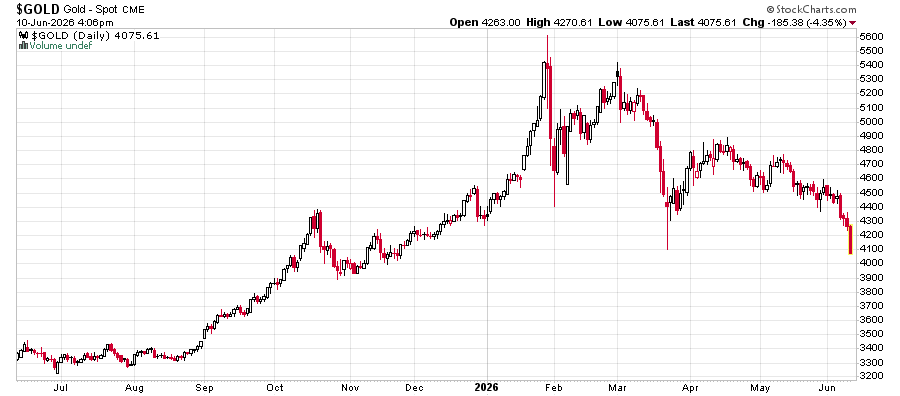
Here is a chart of spot gold prices over the past 6 months. I have added in three “trendlines” to the chart, which was a rough hack job:

For technical analysis fans, here are some questions:

1. Is it a foregone conclusion that gold will continue rising, or at least no lower than $1260, plus a few dollars each day?
2. If so, what is the proper trendline to use?

Technical analysis also suggests that if the trendline “breaks” that you can no longer assume the trendline exists, and that there is some other trend that is occurring. How do you figure this stuff out without using the chart as a retrospective explanation?

The only reason why I look at charts is a measure of sentiment over time, rather than trying to derive future prices from chart movement.

The Canadian Dollar see-saw

Attached is a chart of the last six months of trading of the Canadian dollar, relative to the US dollar:

One issue I have with technical trading is that in retrospect it is obvious there are “trends” and “momentum” factors as participants try to load up (or dump) the product in question, but when does the party end? Today? Tomorrow? Next week? How will you know the party ends? Right now, “sell at 98, buy at 95″ seems to be the optimal algorithm. We will see if that’s the case or not.

Even though I’ve got exposure to both currencies, I will only be watching this from a distance. It’s very difficult to know whether the Canadian dollar is “fairly” valued or not – how do you even begin to construct a fundamental model? This is why a lot of currency traders are primarily technical – hop on the bandwagon, and hope others are still keeping the cart going before you dump your trade.

Potash – Corporate takeover bid

Many years ago, the first time I heard the word Potash, I thought somebody was referring to a narcotic. I quickly educated myself (Wikipedia is a good primer) and nodded, and didn’t think about it otherwise. Potassium compounds aren’t exactly rare, nor are they terribly exciting – you can use potassium chloride instead of sodium chloride to replace your table salt, and more importantly, its usage as a fertilizer.

Canada apparently has the majority of potash reserves, and the major corporation is Potash Corp (TSE: POT). Never in my wildest imagination did I think back then that it would result in a triple over the past 5 years, but apparently agricultural fertilizer is in such demand that companies with potash reserves have been bidded through the roof.

Yesterday, Potash Corp received a hostile takeover bid for US$130/share, while the day before the takeover trading closed at US$112. After the takeover was announced, trading closed at US$143/share, which likely means that the takeover bid will fail at the present price.

Potash has about 297M shares outstanding (304M diluted), which implies that the price paid is around CAD$40 billion for the equity, plus CAD$4 billion in debt for a total price of around CAD$44 billion. The balance sheet has about $6.5 billion in equity, so there is a takeover premium of about $38 billion over book value. Presumably this is because of the embedded value of their resource reserves, but I skimmed their annual report and couldn’t find any clean quantitative data – it has to exist somewhere, but I couldn’t find it when wading through the many pages for a minute.

Apparently 2008 was a banner year for the company, where high prices allowed the company to mint about 11 dollars per share in earnings. 2009 was a more moderate year, with $3.25/share of earnings. The first two quarters of 2010 have an EPS of $3.02/share, so strictly from a backward looking P/E ratio, it looks expensive. Even if you assume every year is like 2008 from here on in, the CAD$44 billion valuation (roughly CAD$145/share) appears to be “average”.

Because of my investment laziness, combined with a lack of knowledge of the dynamics of the potash industry, I wouldn’t make a firm statement on the valuation of the merger. I don’t plan on touching this stock without doing a lot more research (which I am not going to do). Just strictly looking at the financial statements, it looks like the party willing to pay $44 billion for the company is over-paying, while the board of directors that are recommending the rejection of the takeover are likely playing for more money from their potential suitor.

Still, the general lesson here is that when you learn about some obscure compound or mineral, it might pay to look a little more carefully at it and see if it is plausible whether it will be an in-demand commodity in the future. Everybody knows about petroleum and potash, but what is next? Uranium already had its hype period in 2007, while “rare earths” and lithium are making the headlines currently – what’s next? Antimatter?

Canadian oil companies

In today’s trading there are a few oil and gas companies that are tripping my price range thresholds – i.e. they might be worth further research and consideration.

I am generally of the opinion that the markets at this time are greatly oversold, with presumably most of the selling done across the Atlantic Ocean in Europe by panicked investment bankers and hedge funds. Unfortunately (or fortunately), I am still looking for areas to safely deploy cash.

Cyclical nature of commodity markets

A third-hand report about Canadian Natural Resources stating that capital costs to hire critical contractors (e.g. for drilling and such) are increasing and leading to significant project budget overruns.

This is the nature of commodity markets – when prices are high, all companies rush in to expand projects and try to increase capacity so they can sell more product. When they are finished, they dump into the marketplace, depressing prices. Because of the fixed capital investment, it makes better economic sense to keep pumping product out even when the price of the underlying commodity does not make economic sense if you were beginning the project from scratch. As an example, if you include all fixed costs and it comes to $60/barrel, if you expect oil to be above $60 then it makes sense to build the project. If marginal costs of extraction are $40/barrel after that point, then it makes sense to keep operating even if you are below the break-even point for the entire project.

This is how you get commodity busts – even below the cost of marginal extraction. It happens when all of the producers have put in their fixed-cost investments, and it is more profitable for them to mine the product than to idle their machines.

Figuring out when this happens on a global scale is very, very, very difficult to perform. It requires a lot of industry-specific knowledge and a lot of data mining, and a lot of gut instinct. There is also the demand-side of the formula – if you expect consumption to increase faster than the supply expansion then you can still anticipate price increases. However, the big downside risk to the crude oil mining industry is not the increasing cost of providing supply, but rather determining if sufficient demand exists to warrant high future prices. Executives of oil companies are more or less trying to predict whether oil prices will continue to remain high two or three years out, when capital project decisions today are made.

Companies like the newly public Athabasca Oil Sands will not begin production until around the 2014 time-frame; they are incredibly leveraged to oil prices.

The futures markets do give a small hint of what is to come – January 2015 oil futures are at $86/barrel, compared to $72/barrel for July 2010 prices.

Gold is gold

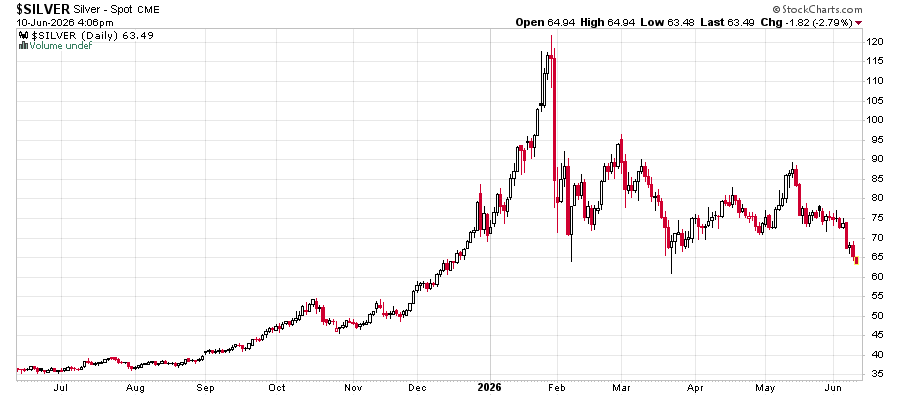
Typically the price of gold is anti-correlated to market fortunes. However, during last week’s market calamity, it has seen a huge price influx, even when adjusted for Canadian currency. When all the world currencies are seemingly being debased, investors retreat into hard assets – this means claims to cash flows (through shares), bonds, and also commodity assets.

My only fundamental issue with gold is that it doesn’t serve much function other than being the psychological crutch of the monetary system. It is a good commodity to store value simply because of other people’s perceptions that it is valuable – paper currency works exactly the same way. When I go to a grocery store and exchange green pieces of paper for actual food I can consume, the person on the other end of the counter presumes they can buy something with the green pieces of paper. The same works for gold.

If you were to take out $100,000 in value in gold you would still have to carry 2.6 kilograms (about 5.7 pounds) of gold. Gold’s density is 19.2 grams per cubic centimeter, so this can be represented in a cube about 5.1 cm on an edge. This is slightly smaller than stacking a 3×3 cube of Las Vegas craps dice. This is quite practical when you consider that the equivalent in paper currency would be 1,000 $100 bills (think about how thick a 500 page laser printer stack is when you shop for office supplies), and you would presumably be able to avoid counterfeiting issues with a gold cube.

I am wondering why a more useful commodity, such as crude oil, has not been bidded up. Maybe one reason is because it would be difficult to stuff a few barrels of oil in your pocket or inside your safety deposit box. Knowing something about regulations concerning the storage of petroleum, it would also be impractical to pump thousands of barrels in a backyard tank.

What is mysterious, however, is why shares of gold production corporations haven’t risen in relation to gold prices:

Maybe there is value somewhere in gold equity?

Chinese investing in Alberta Tar Sands

It’s making the news headlines that Sinopec, a Chinese “crown corporation” is taking ConocoPhilips’ 9% stake in Syncrude, for US$4.65 billion. This will put Syncrude’s valuation at around $52 billion.

Syncrude is a joint venture company with a strange ownership structure. They are one of the large tarsands miners in Alberta, right up there with Suncor.

What’s odd is that Canadian Oil Sands’ market capitalization is about $15.4 billion at this moment and they only have a billion dollars of long term debt. Canadian Oil Sands’ 36.4% valuation of Syncrude would be worth about $18.8 billion at the rate that Sinopec paid for their 9% stake. Obviously I might be missing something here in terms of valuation (not being able to access Syncrude’s financial statements would be an important part of this), but it seems like Sinopec might be overpaying.

China has accumulated a lot of cash (especially US currency) through exports and are concerned that it will be inflated away and are trying to find places to invest it. One way is through minority investments in other corporations, especially ones that serve the strategic purposes of the Chinese government.

Geopolitical risks of foreign operations

Kyrgyzstan is a country that probably was on nobody’s radar before a few days ago when the country went into a revolution.

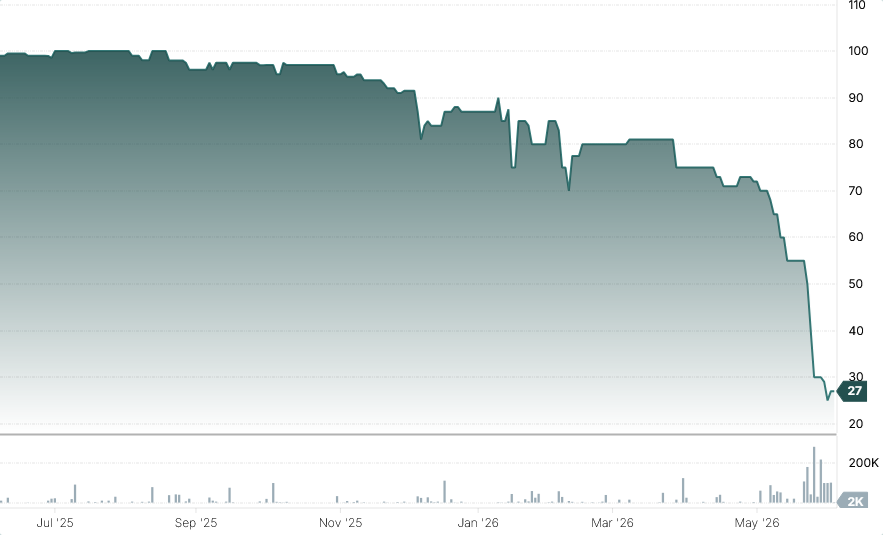
However, some companies have operations in Kyrgyzstan – Centerra Gold has mining operations located there and correspondingly, their stock price took a drop with the heightened uncertainty:

Whenever having an investment interest in a Canadian-headquartered company with foreign operations, it always pays to keep an eye on the country where the operations are located. I am reasonably sure that if somebody was paying attention to Kyrgyzstan before their revolution hit the news, they could have protected their investment interests.

Steam-Assisted Gravity Drainage

Anybody investing in oil should know the fundamentals of how the oil is extract out of the ground. The traditional (called conventional) method is used in places like Saudi Arabia – sticking a tube in a strategically-located position in the ground and sucking up the contents.

Steam-Assisted Gravity Drainage was an invention that has lead to the opening up of oil reserves that otherwise would have been inaccessible. There are quite a few companies in the Alberta area that use this to mine oil. A very basic example of how this works is on Cenovus’ website, which is semi-education and semi-corporate propoganda.

Cenovus used to be part of Encana, Canada’s largest natural gas producing company. They split off last year.

The other form of mining, taking tar sands (bitumen) from the surface and processing the material, is done by companies such as Suncor, and generally give the industry a perception of being environmentally damaging.

As the price of oil continues to increase, alternative methods become increasingly economical and it is well worth it for an investor to educate themselves on the processes used to extract energy from the earth.

Kitco selling Rhodium

I take a look once in awhile at Kitco’s precious metal store and notice they are now selling Rhodium.

Rhodium is a very interesting precious metal and it is by occurrence about four times less common than gold. Other metals of roughly similar concentration are Iridium, Ruthenium, and Rhenium – all a bit cheaper than Rhodium.

I don’t have any particular love for precious metals other than that they are nice to look at and feel (especially the density), but one big concern as an investor would be – are you actually getting what you paid for? Once you receive the Rhodium in the mail, how do you know you got shipped the precious metal instead of shreds of some other (cheaper) metal? Obviously you are relying on the reputation of Kitco (which is solid) but once you sign for the package in the mail and rip open the container, how do you verify Rhodium?

At least with gold there is a basic non-destructive test you can run at home to knock off all forgeries (water displacement). Unfortunately, the density of Gold is nearly identical that of Tungsten, so to detect Tungsten forgeries you have to resort to an interesting methods (e.g. determining how fast sound waves travel through the metal – sound moves through Gold about twice as slow as it does through Tungsten). Also, working with Tungsten is very difficult (the melting point of Tungsten is very, very high, much higher than gold).

If I ever bought a gold bar, the first thing I would do is the displacement test. It would also be rather fun to perform.

A large component of value for most precious metals is the psychological value that somebody else had to go through a lot of work to mine and refine a lot of ore to concentrate the metal into a nearly pure form. This is contrasted with industrial usage, where you can make a genuine argument with respect to the value of a metal.

For example, if somebody invented a way to repel gravity, but it had to rely on Rhodium, you can be sure that the price of Rhodium would skyrocket and it would quickly replace crude oil as being the most commonly quoted commodity in the news.