Apple and the winner-take-all market

Every media outlet is reporting the blowout quarter that Apple had – the financials are just something to be salivated at. With $46.3 billion in sales, $25.6 billion in cost of sales, you are left with $20.7 billion of gross profit. Subtract $3.4 billion in operating expenses and you are left with $17.3 billion in operating income.

This was in a single quarter. A lot of people must have wanted their iPhones and iPads for Christmas.

Subtracting taxes and other matters still left shareholders with $13 billion net at the end of the day.

When you add up the cash and marketable securities, they still have $98 billion to splash around.

Normally in technology, companies face incredible price pressure as competition is very fierce. Apple behaves as if it has a monopoly on its market, and in the minds of many consumers, they might as well.

There is erosion potential with the iPhones (specifically with Google’s encroachment with Android), and the iPads are starting to face some functional competition. However, this will not dissuade people from the name brand, as Apple has turned into somewhat of a status icon – this in itself will make it more difficult for competition to break.

The question for Apple – can they keep it up?

The question more relevant for investors would be – what technology upstart ten years from now will be doing the same thing?

Thumb twiddling

The biggest mistake any investor can do is just invest cash for the purpose of investing it in something instead of investing it in something proper.

Hence, I am still twiddling my thumbs.

Curiously I do notice Encana (TSX: ECA) is up about 6% despite the fact that natural gas futures are still depressed. Might be a sign of short covering?

I’ve also been doing some research on R.R. Donnelley & Sons Company (NYSE: RRD) – I have owned their corporate debt in the past so I have not had to do much additional work. They are facing the same issues that Yellow Media had, mainly a good chunk of their business (catalogs and cheque printing) is getting enveloped by the online world. Still, the company is hugely cash flow positive and doesn’t even have the debt albatross that Yellow Media has. If it wasn’t for the fact that they are a well-known case, I might dip my toes in.

There are a couple other smallish-cap companies ($100M-$250M range) that I am reluctant to mention here that seem to have very compelling valuations, plus almost no financial pundits are paying any attention to them.

The great thing about having a large cash position is that it feels like I am working with a blank canvass. Despite earning almost nothing in yield for cash, I also do not feel pressured to make any portfolio decisions. If I have to wait out an entire year without hitting any candidates, so be it.

Natural gas continues its trek down

A fairly mundane day in the market, but there is one item that has been flashing red on my screen for the past week, and that is the spot price for natural gas:

The March contract is trading at $2.50/mmBtu and this is very close to the lows that were reached during the 2008-2009 financial crisis. At present prices, it becomes very uneconomical to develop produce natural gas and it makes you wonder how long it will be before you start seeing insolvencies in natural gas companies. Those that have over-leveraged themselves will be facing the consequences soon.

I look at companies like Encana (TSX: ECA) – their operating and transport costs is approximately $1.60-$1.70/Mcf, which is still well below spot price. It explains the $12 billion market capitalization, but it makes you wonder when the bottom will be for it and also the spot price.

Mortgage rates in Canada

It is making the airwaves that the Bank of Montreal is offering a 5-year fixed rate mortgage at a 2.99% APR rate. There are slightly less favourable conditions attached to such a mortgage (lower prepayments throughout the mortgage), but otherwise this is the lowest 5-year fixed rate ever offered.

With the risk-free 5-year government bond rate at 1.3%, the bank is still making money from the loan. I’m guessing the only people qualifying for such a mortgage would be those that have very good credit ratings and those purchasing homes with reasonable leverage (e.g. 25% down payment or above).

Interestingly enough, since most financial institutions have raised rates on their variable rate mortgages – (last year there were offerings that went as low as prime minus 0.9%, or 2.1% with existing interest rates, while today you will be lucky to receive prime minus 0.25%), it makes the fixed rate offer a significantly superior option. Although I do not believe short term rates are going anywhere in 2012, it is difficult to fathom that short term rates will still remain at the levels they are through the duration of a five year term.

This is yet another function of the low interest rate environment where people are encouraged to financially leverage on cheap credit. At 3%, why not spend the extra $100,000 on those granite counters? That’s only $250/month extra…

The argument that low interest rates increase asset prices is a simple mathematical argument, but the real estate market in the USA, where interest rates are equivalently low for long-duration mortgages, is proving that rates alone are not a sufficient explanation for asset values.

Unloading illiquid shares

Just a side note in the portfolio, I unloaded the last 100 shares of a company that was relatively illiquid (market cap under $20 million). The algorithmic order I set was placed in early October and the execution finished today.

The whole trade (in and out) ended up losing the portfolio less than 2%, but obviously the story after the investment was made changed which triggered my exit order. Getting in and out of illiquid stocks is a real pain, and unless if the potential risk-reward ratio is disproportionate, such transactions should be valued explicitly with a discount acknowledging the lack of liquidity.

Throughout my history my dabbling in illiquid stocks has been less than spectacular – my sweet spot of investing has tended to be small cap stocks ($100M-$1B capitalization) instead of microcaps.

Lululemon again

Lululemon (Nasdaq: LULU) is up to US$61/share, nearly at its all-time high upon announcing that it made more money in the fourth quarter than analysts expected.

I have written about LULU before and am continually amazed at their ability to “surprise” in such a fashion. The most valuable asset such companies have is their branding, and LULU has been able to strike the sweet spot in women’s fashions for quite some time – although there is competition encroaching, they have still been able to keep surprisingly ahead.

At a market cap of 8.8 billion, it makes you wonder how much higher they can go – looking at what that capital can purchase, instinctively I would not want to put a single penny of that into Lulu given existing valuations. That said, I thought the same thing when it was trading at $4 billion. Tells you know much I know about fashion trends.

A reminder on yield chasing

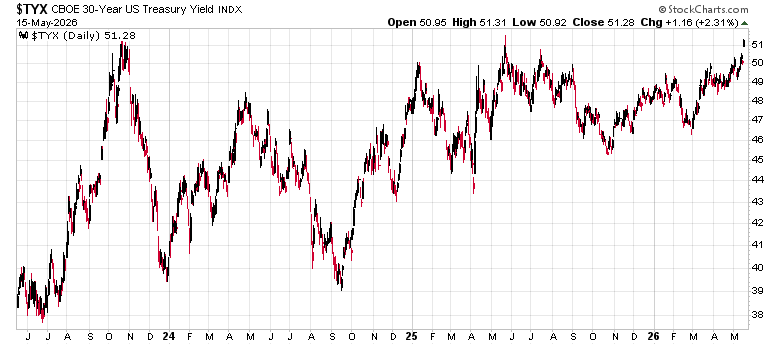
One other conviction that I have compared to the host of “I don’t know”s I gave in my 2011 year end report is that everybody is chasing yield. In a low interest rate environment, capital is shifting towards securities that can spin off safe income – just imagine if you are a pension fund manager and need a targeted return – formerly you could bank on 30-year treasury bonds giving you a ~6% yield in the first five years of the century, but the zero interest rate policy has pushed down yields to currently 3%. If your mandate is to make 8%, formerly if you had a 50/50 bond/equity allocation you would need to make 6% on the bonds and 10% on the equity. With bond yields presently at 3%, the same allocation forces you to make 13% on equity – a much more difficult task for a fund manager. Suddenly placing bets on that speculative pharmaceutical research firm seems to make financial sense.

How do you make up the yield difference on the fixed income side? By investing in treasury bond-like securities and this means climbing up the risk spectrum – provincial/state debt, municipal debt, corporate debentures, and even preferred shares.

Everybody is chasing yield and prices today reflect this. Just be warned that the markets might face a Europe-type situation where the underlying entity no longer can pay out such cash flows – even when European banks are getting interest-free loans, they are still choosing to put their capital into safer 10-year German bonds at 1.9% compared to Italian debt (7.15% currently). Measuring the ability of corporations and sovereign states to actually pay the income is always a vital calculation. As the cliche goes, it is about return of investment, not return on investment.

This could be an explanation why certain large cap stocks are trading at very low P/E ratios – albeit, it makes no difference (taxation differential between dividends and capital gains notwithstanding) whether a corporation makes a 10% after-tax return and retains it, or gives it out in a dividend. Somebody would look at both companies and likely favour the one actually giving out the dividend. The true answer is whether the company can deploy its retained capital as profitably.

The opportunities presenting themselves currently seem to be very narrow and opportunistic and off the radar. It’s not like buying shares of Starbucks under $10/share back during the economic crisis.

Petrobakken trying to find the cash

On December 13, 2011, Petrobakken (TSX: PBN) released more information with respect to their 2012 plans and numbers.

The two salient snippets are as follows:

We are also pleased to announce our initial capital plan for 2012, which allow us to build on our 2011 operational success. We anticipate capital development expenditures of approximately $700 million, primarily focused on horizontal drilling and completions, predominantly in the Bakken and Cardium light oil plays. We expect that this drilling-focused activity will generate a 2012 exit production rate of between 50,000 and 54,000 boepd. Our estimated year-over-year average production growth will exceed 15%, on an absolute and per-share basis. We expect this initial 2012 program to be executed entirely from funds from operations, with surplus cash flow available to fund dividends and debt repayment.

For 2012 we estimate that our corporate base decline rate will be in the range of 30-35%. In 2010, our base production declined approximately 40%, while the 2011 base decline rate is now forecast at approximately 35%. We have been encouraged by the results of our recently completed wells, and we are also beginning to see the benefit of the continued maturation of our producing assets with a significant proportion of our production now coming from older, shallower decline, horizontal wells.

As part of our ongoing balance sheet management, and to reward continuing support from existing shareholders, we are pleased to announce the implementation of a DRIP. The DRIP provides eligible holders of common shares resident in Canada the opportunity to reinvest their monthly cash dividends in PetroBakken shares at a 5% discount to the then current market prices. Petrobank (59% shareholder of the Company) has indicated an intention to participate in the DRIP with respect to 50% of their PetroBakken shares, which will amount to $53 million in additional liquidity to the Company on an annual basis. Subject to the receipt of approval of the Toronto Stock Exchange, the DRIP will be implemented for the January 2012 dividend, which is payable in mid-February 2012. Additional information regarding the DRIP can be found below.

The company is planning on spending $700M in capex in 2012, which is a decrease from projected 2011 capex numbers of $900M. The capital budget for 2012 will be slightly below their operating cash flow for the year, assuming current oil prices remain steady (a 12-month extrapolation of 2011 figures for the first nine months is $650M, noting that WTIC prices were lower then than they are now).

It still leaves one wondering when the company is actually going to generate significant amounts of cash in excess of capital expenditures – when you add the $180M of dividends projected in 2012 (minus the ~$53M that Petrobank will re-invest for Petrobakken equity), it does not leave much for them to pay off their February 2013 debenture, which holders have a one-day put option to redeem (and given the small coupon and the credit profile of the company, they most certainly will unless if there is a sweetener given to them in the interim).

The DRIP decision in itself is rather interesting – it effectively starves half the cash flow that Petrobank will receive from Petrobakken in exchange for further equity. Since Petrobank owns 59% of Petrobakken, it will result in Petrobank foregoing $53M/year in dividends in exchange for further equity. Assuming a $13/share price for Petrobakken, this will mean Petrobakken will issue 4.3M shares to Petrobank over 2012 – a cost of capital of 7.8% for Petrobakken, assuming the dividend is not cut. This is expensive capital for the company.

The company has hedged a significant amount of oil (20,000 boepd, about 40% of its expected production) with existing high prices which I think is a smart decision. Still, they are extremely leveraged and their only salvation is continued high oil prices. If there is any significant contraction in the price of oil, they will be in clear financial difficulty, especially when it comes to negotiating with the $750M debenture that is effectively due in February of 2013.

Q4-2011 Year-End Divestor Portfolio Performance Report – 2012 Predictions

Portfolio Performance

My very unaudited portfolio performance in the fourth quarter of 2011 is approximately +6%. For the year ended December 31, 2011, the performance is approximately -13%.

You can read the Q3-2011 report here. The 2010 year-end review with 2011 commentary is here.

My historical performance is as follows:
2006: +3.0%
2007: +11.7%
2008: -9.2%
2009: +104.2%
2010: +28.0%
2011: -13.4%

My six-year performance, compounded annual growth rate, is +15.4%.

Portfolio Percentages

At December 31, 2011:

0% Equities
16% Income Equity
0% Short Term [0-5 yrs] Corporate Debt
9% Medium Term [5-9 yrs] Corporate Debt
75% Cash
(Note: “Income Equity” is the term I used to describe equity/units in companies that give out over 75% of their cash flows as dividends. This also includes preferred shares.).

USD exposure as a total of the portfolio: 19%

Portfolio Commentary

What a crappy year in terms of my own performance. Most of the damage was done in the third quarter, where I significantly underperformed the main indexes. The source of the bad decisions stems from two fundamentally bad trades. The rest of the trades were also sub-optimal, but they were a knee-jerk reaction to the carnage that had happened back in 2008 and a desire to not repeat what could have been a potential 40% reduction in capital. Instead, I was relatively unhappy to settle for a 13 percent haircut for this year. Most of my post-damage analysis was in my third quarter report and I will not repeat it here.

The total return for the S&P 500 this year (including dividends) was approximately 2%. The return for the TSX (excluding dividends) was -11%. The big winner in 2011, had you been clairvoyant, would have been to concentrate your entire portfolio into 30-year US treasury bonds, which would have netted you a 30% gain as yields crashed from 4.4% to 3.0% at year end. Hindsight is 20/20, and who would have ever thought that the trillion-dollar deficit producing US government, with all of its money-printing facilities going at red-line speeds, would have such demand for its own long-term debt. Strange how the world of economics works.

There was no way that I would be able to sustain the performance I had from 2006 onwards, but I hope that future years will not be as damaging as this one was. Although the loss of capital does hurt, I am reassured by virtue of my very high cash position that I am starting from a relatively “blank canvas” and can continue to hunt for various opportunities as they come up. Unfortunately, I have not been finding many.

Outlook and 2012 Predictions

Traditionally at New Years Day, my crystal ball is usually quite clear, but as I write this report, it is incredibly cloudy. To quote Star Wars, there is a disturbance in the force, but I can’t quite tell where these disturbances will take us.

On the broad market, I see a good portion of large-cap companies trading at relatively cheap valuations. For example, you see Dell trading at 7.5 times estimated future earnings, which looks ridiculously cheap and an “easy” earnings yield of 13%, but if the whole world is seeing this, why is the stock not trading higher? Something is wrong there. Why the risk aversion?

The same thing can be said for a whole host of other companies, including financials, resources and other sectors – the P/Es look low, especially with respect to the risk-free interest rate (in Canada, that would be 1.3% on 5-year money and 2% on 10-year money).

More often than not, experience has taught me that when markets are valuing well-known companies for relatively cheap valuations and that you don’t have an explanation for such cheap valuations, there is something else embedded in the price that is signalling that the earnings projections are some sort of illusion.

A classic example of this from my younger days as an investor (around the time of the internet bubble collapse, 2001 or so) was investing in Kemet Corporation (NYSE: KEM) which specialized in capacitor manufacturing. There was a shortage of capacitors and prices and margins for the three big players in the field were very high – high enough to the point where companies were trading at P/Es of 7-8, which made share valuations look very good. Of course, the inevitable happened and profits fell as the market normalized itself, and the P in P/E went down, as well as the E going down. I managed to get out with small losses before realizing my mistake and have carried this lesson forward.

Incidentially, Kemet is trading at a future P/E of 5, which makes you wonder whether history is repeating itself or not.

So in terms of the broad markets, while things look cheap and things seem poised for an increase, will it occur? I don’t know. I am not a large cap investor at heart so it does not make much of a difference to me, but if I was forced to either be in cash or be in the major indexes at present, I would choose a simple high-yield savings account.

Interest rates are another puzzle – will US Treasury Bond yields go lower? Is the deflation bet the safe bet? Probably when everybody has capitulated and bought into the 2% long-term yield thesis that treasury bonds will make a good short. I do not think the long-bond trade has crowded in enough, although it feels slightly bubbly. Again, something to watch, but not necessarily to participate in.

The same thing goes for commodities – gold and oil – even with all the geopolitical instability brewing (especially revolving around Iran and the Middle East, which has always occurred), I generally do not have a good read other than that if deflation and economic slowdown is in the future, it would suggest that prices for both commodities will head down rather than up. North American natural gas ended the year at $3/mmBtu, which is getting amazingly close to the $2.50/mmBtu that was seen in later 2009 – at these prices, natural gas producers simply cannot make money. Should I be investing in a gas or electric range? I don’t know.

On the Western Canada side of things, will the Vancouver Real Estate market finally go into a price recession? Will the influx of capital from Mainland China slow down? I don’t know.

As you can tell, “I don’t know” seems to be a common answer to what my crystal ball is telling me about most macroeconomic scenarios going on in the markets at present.

Probably the only thing I am certain of is that US presidential polling will be driving the 2012 markets to a degree, especially if there is no certainty on who the Republican candidate for President will be. I always thought that Romney had it in the bag simply because he is the picture boy for “getting American business back in shape”, especially contrasted with Obama’s anti-business image. That said, as 2008 will attest to, presidential election years are always volatile for the marketplace as they try to feed in implied assumptions on how the next four year regime will be shaping up to be.

When you have a high amount of cash in the portfolio, every market rally stings because there is a psychological perception that you missed out on something – it is kind of like looking at the Lotto 6/49 results and saying “gee, if I had just picked those six numbers, I would be a million dollars richer” – absurd, but a very human part of the investment process. The trick with high cash levels is that when you do not have convictions that you believe are market-beating, the safest and most prudent action you can take is to just park your money in cash and go fishing, read a book at the library, or do anything other than investing it in some mediocre instrument. Eventually opportunities will emerge. I just don’t see them right at present.

Holloway Lodging REIT – debt conversion

Following up from my previous post on Holloway Lodging’s (TSX: HLR.UN) debt situation, I notice on December 22, 2011 they gave a conversion notice of their debentures to units:

Holloway Lodging Real Estate Investment Trust (TSX: HLR.UN HLR.DB.A) (“Holloway” or the “REIT”) announces that it has today given notice to the holders (the “Debentureholders”) of its 6.5% convertible unsecured subordinated debentures (the “Debentures”) that it will redeem the Debentures in full on January 23, 2012 and that it will satisfy the redemption price of the Debentures on the redemption date by issuing trust units (“Units”) of the REIT in lieu of cash, in accordance with the terms of the trust indenture for the Debentures (the “Indenture”). Any accrued and unpaid interest on the Debentures will be paid in cash on the redemption date.

The number of Units to be issued to Debentureholders will be determined by dividing the aggregate principal amount of Debentures outstanding by 95% of the weighted average trading price per Unit for the 20 consecutive trading days ending on the fifth trading day preceding the redemption date (the “Current Market Price”). Based on the redemption date of January 23, 2012, the 20-trading day period commenced on and included December 15, 2011 and will end on and include January 16, 2012.

Holloway also announces that it will not make the interest payment on its Debentures when such payment is due on December 31, 2011. Holloway intends to make such payment by January 13, 2012, as permitted by the terms of the Indenture.

This is a significant development for unitholders in that the roughly $51.8M face value of debentures outstanding (at least as reported by the TSX; this may be slightly lower due to buybacks) will be converted at the rate of approximately 7-8 cents per share, at least given existing trading patterns to date. Unit prices cratered from 20 cents to as low as 4 cents upon the announcement (currently trading at 10 cents), while debenture prices dropped from 58 cents to as low as 40 cents and is currently at 53 cents on the dollar.

Assuming an 8 cent per unit conversion price, this would mean dilution of about 94% for existing unitholders. Somebody holding $1,000 face value of debentures would receive 12,500 units, implying a unit price of about 4.25 cents post-conversion. The remaining entity will have about 670 million units outstanding and at 4.25 cents per unit it would imply a market capitalization of about 28 million.

Using the 2010 cash flow statement as a very blunt proxy for future performance, the entity without the convertible debentures will be able to pull in about $5.9 million in operating cash flow, which would put it on sounder financial footing. It could suggest that the post-conversion trading price of the units will be around 7-8 cents.

Finally, the company has decided to consolidate the remainder of its non-mortgage debt on the chairman’s company Geosam:

Holloway also announces that it has entered into a second amendment to its credit agreement dated as of June 15, 2011 among Holloway, Geosam Capital Inc. (“Geosam”), as administrative agent, and Geosam, together with such other persons from time to time party to the credit agreement, as lenders, (the “Credit Agreement”) to increase the amount of funds available for drawdown by $3.6mn for certain limited purposes. Holloway has increased the amount outstanding under the Credit Agreement by $1.8mn in order to purchase from the holders of its interest-bearing promissory notes approximately $2.8mn of such notes, representing all of Holloway’s interest-bearing promissory notes outstanding.

This is presumably linked to the resignation of the CEO (Squires) that lasted in the company longer than I expected him to after the takeover of the company by George Aryoman and Geosam.

My conclusion here is that the market is valuing the debentures and units as slightly expensive, but it is within an order of magnitude of a fair valuation. Finally, my continuing thesis is that the only entity that will make any money from Holloway will be Aryoman and Geosam by virtue of their control of the company and the secured credit facility which will continue to hive off interest income from Holloway unitholders. This will continue as the assets are stripped and sold from the trust.

In other words, this is a fun one to watch, but not to invest in. I feel fortunate to dump my debentures at the price that I got for them (roughly 60-65 cents) and get out of dodge. If unit prices go down to the 4 cent level again, the trust may be worth putting a few pennies in, but this would be one of those typical “pick up the cigar butt off the street for one last puff” type value plays.