Kicking the can forward

Now that the European debt situation is seemingly resolved, the markets are now on rally mode. Credit is loosening again and this gets reflected in the price of debt and equity.

How long will be it before the other countries in Europe line up at the trough?

The fundamental problem is debt accumulation and it is not solved by a one-time papering over – somebody has to pay for it. It is just a matter of when.

Of course this is sour grapes because of my high cash position, and I do suspect that plenty of others are on the sidelines. This is especially for pension fund managers that have to make their mandated 7.5% return on assets while sitting on a mount of 10-year treasury bonds yielding 2.2%. They are forced to buy equities since there is no other assets that can possibly generate a higher return.

Commodities are also making a return, assisted with the US dollar depreciating again over the past month.

This is almost turning out to be a mirror image of the 2008 financial crisis – in October of 2008, the world’s problems were solved with things like TARP and QE, but it took another six months for the markets to fully digest it and reach a panic low. It is something I am open to believing may happen again.

Yellow Media preferred differentials

As I pointed out earlier, there was a significant yield differential between Yellow Media preferred shares C and D (TSX: YLO.PR.C and YLO.PR.D). The market has closed this gap now to about 0.7% if you use the most generous bid-ask spread quotations (e.g. the ask on the C’s vs. the bid on the D’s).

The common shares have gone on a massive surge over the past couple weeks, and this has translated into strong gains for those that have held their noses and accumulated positions during the meltdown.

The closest analogy I can think of what is happening is what happened to Telus (TSX: T) back in 2002 when the whole market dumped them down to $3.50/share for no real reason other than that they had a lot of debt and old-school telecom was on its way out.

Common shareholders face the most risk and will receive the most reward in a favourable scenario, but preferred shareholders will also come out very well and continue to receive income.

Of course this can all blow up if the next quarterly report is adverse. However, you would think after inking their last credit facility that they would have had some sort of visibility on their results to prevent an early default.

Risk on, Risk off

It looks like the risk-off trade is “on” again!

This risk-off, risk-on type market environment reminds me of this very classic scene that people of my era would remember, except dealing with wax:

Risk on… risk off. Master this and win the tournament, or rather have the pleasure of stuffing your wallet at the expense of other people that have decided to get bullish.

Yellow Media Update

Yellow Media (TSX: YLO) common shares have climbed up from their ultimate low of 12.5 cents on October 3, 2011 to 32 cents presently. There has been no news from them other than a press release stating they have been named one of Canada’s top 100 employers for the 6th year running.

Instead, this appears to be a matter of the stock being taken down to the basement level by a stampede of funds trying to desperately get out. Now that anybody that wanted to get out did, supply in the market seems to have been alleviated and the price is now rising.

The business fundamentals remain the same after a month – the company is highly leveraged, but is cash flow positive and has a feasible plan to paying off its debt through internal operations assuming the revenue decay is not too extreme.

Preferred shares continue to trade strangely, with the Series 3 (TSX: YLO.PR.C) trading with a yield about 4.5% higher than Series 5 (TSX: YLO.PR.D). I guess nobody reads the prospectus on these things anymore.

The equity-linked preferred shares, Series 1 (TSX: YLO.PR.A) and 2 (TSX: YLO.PR.B) continue to be coupled to the price of the Yellow Media equity. Series 1 will probably be converted into shares of Yellow Media (12.5 shares per preferred share if the common stock price is less than $2.05/share) on April 2012, while Series 2 stands a good chance of being converted in July 2012, depending on financial results.

While the Series 3 preferred shares trade at around 19 cents of par, convertible debentures are at around 33 cents.

The next big data point for the company is November 3, 2011, where they have already pre-announced a $2.9 billion goodwill write-down. While this will of course result in a grossly negative earnings per share for the year, it is a non-cash charge and the remaining questions for investors will be focusing on the cash flow statement at this release date. As I have repeatedly stated, if the company can produce results that are less than disastrous, they will stand a very good chance of surviving and being able to pay generous cash flows to their shareholders that are senior to the common.

In the favourable scenario, I would expect the market would see that Yellow Media will have the capacity of being in the position of paying off its obligations through internal cash flows and be in a position to raise financing sometime in the second half of 2012. If this occurs, the common shares should trade higher, but the preferred shares should also slowly rise to the 8-10% yield level, which translates into a $17-21/share price for the Series 3. The debentures in this case would also trade 1-2% richer than the preferreds, around 90 to 98 cents on the dollar.

The risk is that they won’t be able to make these financial targets and will be forced to restructure. The preferred shareholders will get wiped out along with the common shareholders. The unsecured debenture holders will likely get very little in such a reorganization.

The risk-reward was high and very high, respectively, and this is why I continue remaining long the preferred shares and debentures of Yellow Media. This is a relatively binary outcome with little middle ground which makes it a fairly unique opportunity.

Sterling Shoes not so shiny

Sterling Shoes (TSX: SSI) went into creditor protection today. The shares were halted at 1:27pm and the CCAA protection announcement came at 1:48pm. The TSX will delist the shares and debentures.

Investors would have had some advance warning given the announcement the company made on September 27, 2011 that they would not be able to make an interest payment on their convertible debentures. Their credit facility with the Bank of Montreal would have prevented them from making the payment.

At this point anybody that held equity in the company should have firmly jettisoned it and the company shares tanked from 37 cents the day before to about 12 cents after.

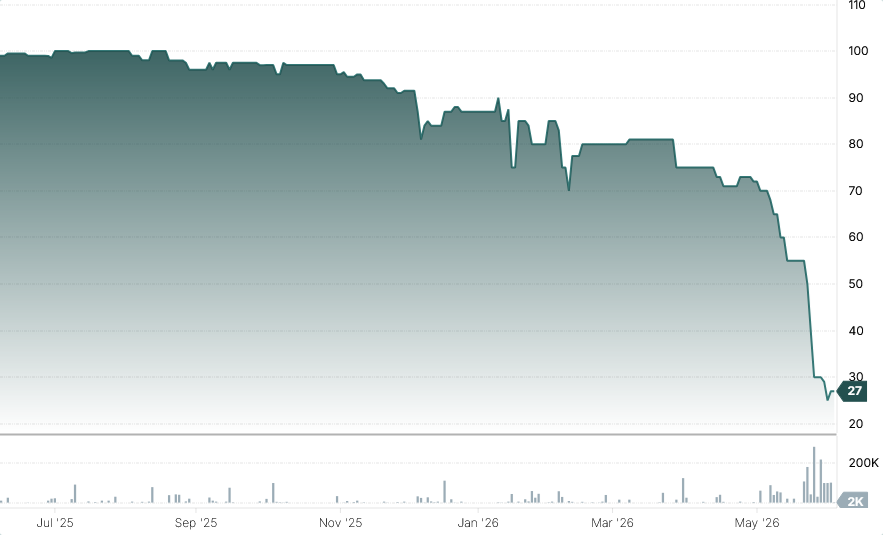
There still may be value in the debentures, although whatever slice of the company they are given in the post-restructuring is difficult to determine. The company had about $13M in secured debt and $25M in subordinated debentures. When compared to sales metrics (2010: $127M revenues, $54M gross profit) and potential profitability (i.e. there is ample room to cut SG&A by getting rid of under-performing stores), the company should be worth more than what the secured line of credit is worth – certainly, debenture holders going into the bankruptcy had not expected much, with the last trade going off at 13.5 cents on the dollar at closing.

The following is a chart of the debentures:

It is impossible for retail investors to get a fair shake at a company during a restructuring, but I do notice that Belkin Enterprises Ltd., lead by BC businessman Stuart Belkin, took a $2.573M face value stake in the Sterling Shoes debentures and announced this on September 2, 2011 on SEDAR. Was this a mis-timed investment or are they planning on participating on the subsequent recapitalization and capture value in a post re-organization stake?

I would expect such holders to get equity and warrants in the subsequent recapitalization.

A Yellow Media oddity

Yellow Media (TSX: YLO) has all sorts of securities where investors can lose their money, but some securities are more stranger than others.

In particular, there is a prevalent oddity I have been noticing in trading of preferred shares of Yellow Media. These are the Series 3 (YLO.PR.C) and Series 5 (TSX: YLO.PR.D) series of preferred shares, which essentially are identical in all respects except for their stated dividend payout.

I will refer to Series 3 as being the “C” series and Series 5 as being the “D” series. The C series pays out $1.6875/share/year while the D series pays out $1.725/share/year. Both contain a rate reset feature, where after 5 years from initial issuance, the C series will be reset to the 5-year government bond rate plus 4.17%, while the D series will be at the 5-year government bond rate plus 4.26%. The 5-year bond is currently yielding 1.57%, but the C series will have their reset in 2014 and the D series will be in 2015.

There are also 8.1 million “C” shares outstanding, while the “D” series has 4.9 million outstanding. There is more trading volume for the C series than the D series.

Taking the midpoint of the closing bid-ask quotation, the C series is trading at $4.24 and the D series is trading at $5.15. Using some very elementary math, this translates into a yield of 39.8% and 33.5%, respectively. Obviously these very high yields are a function of the embedded risk within the underlying company’s ability to actually pay such dividends – the huge issues the business has been facing has been well publicized.

You can arbitrage the difference between the C and D series by going long 102.22 shares of C, while going short 100 shares of D. Using the quotations above, such a transaction would be income neutral and net a capital gain of approximately $81.59 per 100 shares traded.

Practically this is not possible unless if you can locate cheap shares to borrow, but investors looking at both classes of shares should clearly choose the “C” series.

Other than supply-demand dislocations because of the different number of shares outstanding of both series, I am at a loss to figure out why there is such a huge yield differential between the preferred shares. One would think the more liquid series (C) would trade at a slight premium due to liquidity. Does anybody else know?

As a disclosure, I own some of the preferred shares of Yellow Media.

Sun Life and financial insurers

Sun Life (TSX: SLF) reported on Monday that when they report their next quarterly result, it will contain a very negative quarter. In the event of this quarter, it will be negative $621 million, operating amount negative $572 million.

By definition, financial insurance companies (such as those that provide annuities and “guaranteed income funds”) make their living by hedging. If they sell Joe Retail a product that will guarantee them 4% for the duration of the investment, the company will usually have a way of finding somebody else to give them 5% for the same period of time so they can skim the 1% in the meantime. Banks operate under the same principle, except for some strange reason they do not call it insurance.

When financial insurance companies cannot hedge properly, it will result in losses. In the event of SLF, and indeed, in the event of others such as Manulife, they have not hedged against the drop in equity markets and also the low rate environment and have been caught exposed – subsequently forced to take losses.

I have no idea whether SLF or other similar companies are under or over-valued at present. They are not easy companies to analyze and to determine where the risk is compared to the broad market.

Q3-2011 Performance Report

Portfolio Performance

My very unaudited portfolio performance in the third quarter of 2011, the three months ended September 30, 2011 is approximately -21%. For the first three quarters of the year, the portfolio performance is approximately -19%.

Portfolio Percentages

At September 30, 2011:

0% Equities
25% Income Equity
4% Short Term [0-5 yrs] Corporate Debt
3% Medium Term [5-9 yrs] Corporate Debt
69% Cash
(Note: “Income Equity” is the term I used to describe equity/units in companies that give out over 75% of their cash flows as dividends. This also includes preferred shares. Totals add to 101% due to rounding.).

USD exposure as a total of the portfolio: 20%

Portfolio Commentary

Ouch!

This has been my worst quarterly performance since the 2008 financial crisis. I do not measure myself against the S&P 500 (down 14.3% for the quarter) or the TSX (down 12.6% for the quarter) but even against these indices my relative performance was horrible.

There were several contributors as to the massive underperformance. Most of the damage was done in the last two months. Nothing seemed to go correctly.

Bad investment #1: I had invested in some debentures of a company that subsequently tanked 70%, in what turned out to be one of my worst investment decisions of all time. My analysis had indicated that while the underlying company was not exactly a shining diamond in the rough, the margin of safety I believed was sufficient to get a payout which the market now thinks is not happening. Upon a quarterly release I had downgraded my own valuation range significantly and subsequently this security got murdered by the marketplace. Management has a significant equity stake in the company (which has now depreciated significantly so their actual skin in the game has shrunk to a trivial amount) but they made certain claims on a conference call that I believe was not generally credible. My initial investment fraction was a mid-single digit percentage which got taken to nearly zero and it has been cleared out.

Bad investment #2: Yellow Media. Enough said. Went in a few days too early on the preferreds and debentures and this should probably be a reminder to put in a firm rule that “When I suspect a company is going to slash their dividend, it is never good for any part of the capital structure, including those parts of the capital structure that would stand to benefit from the dividend cut.” This is a high risk, high reward situation that is likely going to go south, but the upside reward in the event of a stabilization in the company is also quite considerable (estimate a greater than 5x return if and only if they can manage to stem the financial damage to about 40% of what they historically have been able to do over the past couple years).

Bad investment #3: Chasing a few hundred basis points of yield on a less than 2-year debt investment in a company that should have the financial space to pay them off, but there were adverse scenarios that emerged that would result in them possibly not being able to doing so. I managed to get out of that one by taking a 3% loss on investment, which was fortunate since it currently is about 10% less than what I bought them for initially. The risk has risen to the point where the current valuation is justified and I will not be touching this security at present.

Bad investment #4: I dumped Canadian Oil Sands (TSX: COS) at 24.60, nearly at the price I bought in at, despite it going up to 33 dollars a share at some point. The unrealized gains vanished. The liquidation is simply because that my projections for the oil markets and commodities in general has changed significantly downward. This was not a large fraction of my portfolio, but did contribute to the negative performance relative to the June 30 price point (it was about 28.25/share then).

Bad investment #5: First Uranium Senior Secured Notes (TSX: FIU.NT). Good grief – everything that could go wrong has gone wrong with this. The initial reason getting into this was that the conversion provision was a mightily attractive and cheap way of playing the equity, which seemed to have the markings of actually doing fairly well if management could execute to plan. The notes are secured by substantively all of the company’s assets that are worth anything and are first in line in the event of a liquidation, so you would think that this security feature would be worth something. Investors in these notes have encountered and realized operational risk concerning the mining project, financing risk (they had to do a common equity offering which effectively eliminated any real chances of the conversion option being worth anything), and worse of all, political risk (South Africa). The numbers would suggest that with gold at $1700/Oz, that you would see some value of the company once they finally got their act together but so far this has not materialized. This has subsequently been jettisoned.

When I diagnose “what went wrong”, the simple answer is that it was a lack of discipline. When I review my previous quarterly reports, while they were not perfect, they have still remained a fairly good strategic roadmap in terms of how to navigate what is happening in the markets today. I got fancy, tried to reach for yield and got burned. I should have held onto my cash and twiddled my thumbs instead. I attribute most of of this quarter’s loss to my own stupidity and lack of discipline. Using financial terminology, I generated significant negative alpha this quarter. I am not a happy camper because of this! Usually when I lose money I learn the lesson the first time. I do not like having to learn it a second time.

A couple notes that were not in the “screw-up” category was a diversifying operation where I offloaded a significant chunk of my Rogers Sugar (TSX: RSI) holding for about 5.30 a share in the quarter. Rogers is a very well-run company but the shares are expensive to reflect their operational simplicity and consistent cash generation. They did have a panic spike when somebody did a less than glamorous liquidation – 4.50 is at the lower end of my fair value range for the company, but I would be more than thrilled if they dropped down to the 3.20 level when I last picked up shares (then trust units) from them.

Decision number two was in early August when the markets had their first real meltdown. I made the decision to liquify mostly everything in my portfolio that could be liquidated. It was a couple days of very, very sloppy trading that was not executed terribly well, but I run the calculations on how much I have saved and it was significant when compared to today’s values. The big psychological boost is that the cash gave me the sanity to actually look objectively at the marketplace from a “nearly from scratch” position. It is very tempting to take high risk to make up the losses, but that is a wrong strategy – instead, having a huge cash position allows you to sanely re-evaluate your market assumptions and most importantly, gives you mental space to just get away from the computer – something I did. Unfortunately, if I did this a couple weeks earlier it would have been a lot more pleasant financially.

Outlook

The shape of the markets has changed dramatically over the past quarter – volatility has skyrocketed. The resolution to the European debt crisis appears to be coming to some sort of close, but it will have to involve some resolution to the Greek debt situation. Whether this spreads to other vulnerable countries (in the PIIGS) remains to be seen, but confidence is not quite there.

Financial firms in the USA are also have their share prices suffering – Goldman Sachs, JP Morgan, Bank of America to name a few. Along with them and most other profitable large cap companies, forward-valuations appear to be cheap. Is this because the markets expect these forward projections to not come to fruition?

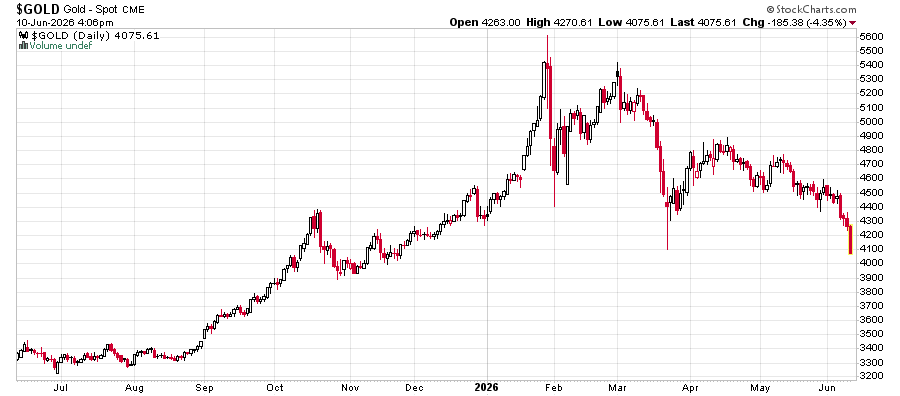
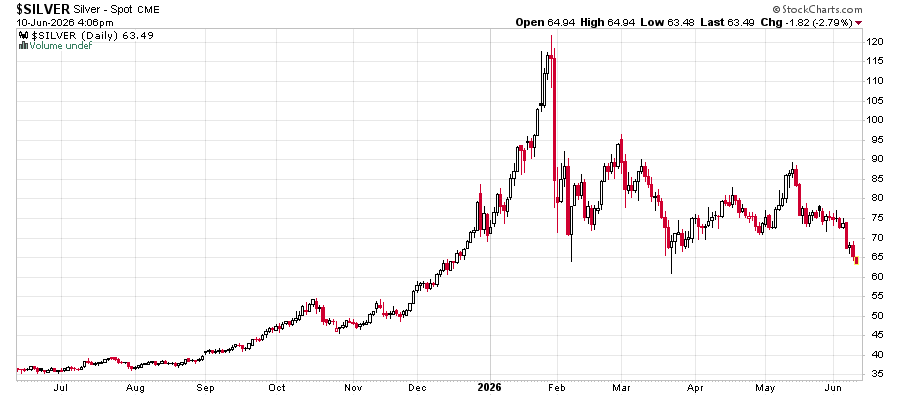
The typical safe haven, commodities, has not been so safe in the previous quarter. Gold has come off of its highs, as has silver and copper. In particular, copper has cratered in the last quarter. Since this is a bellweather industrial commodity, it does not signal well for the world economy.

China is another wildcard, one that accurate data is hard to obtain with – if their economic growth engine slows down, the rest of the global economy (especially commodities) will feel the effects because their $6 trillion GDP is now larger than Japan and third in line from the European Union and the USA.

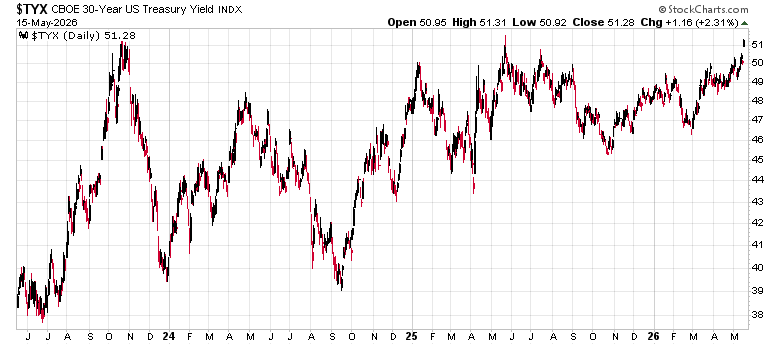
Bond spreads are trading as if we are going to head into another recession – with short term rates in the USA at zero, the spread between short and 10-year is a scant 1.9%, while in Canada, the spread between the 1% short term rate and the 10-year benchmark bond is about 1.2%. In a zero-rate (or near-zero rate) environment, an inverted yield curve is a little difficult to obtain, so the spread is the key indicator. That key indicator says that the Canadian economy is not going to look good in the short term.

It makes one wonder whether the bellweather Canadian financial institutions (e.g. BMO, BNS, CM, RY, TD) will suffer equity hits in the upcoming future. They have always been perceived to be safe, but is the perception reality?

Given my rather lackluster performance over the past six months, I am taking my time before dipping my toes more deeply. While I do sense the concern emanating from the market, history would suggest it would need to come to some sort of crescendo before the ultimate low prices are seen – picking points such as the S&P 500 at 666 less than three years ago is very difficult to do since the panic and volatility at these low points is always so sharp – just like how Yellow Media preferred shares have cratered by 2/3rds in just three short trading days.

The end of the volatility?

Volatility (VIX) has gone under 30% for the first time since the whole mini-meltdown in August occurred.

I’m still remaining very cautious. I have not been in a very literate or concentrative mode over the past few days and thus whenever I have found myself in that situation, do not make investment decisions.

The largest rallies happen with short squeezes

While the Canadian markets were closed due to Thanksgiving, the US equity markets skyrocketed up 3.4% on the S&P 500. There was no particular news other than nothing catastrophic happening over the weekend, but it has been my experience that sharp rallies up tend to be due to traders caught on the short side that suddenly buy into the markets.

I also remain fascinated with the history of the markets from 2008 to 2009 – about how most of the actual crisis was over in October of 2008, but the reverberations and pessimism came to a crescendo in February and early March. This was despite the fact that TARP and practically every liquidity measure conceived had been implemented and all that was left was for that excess liquidity to end up shoring credit across the entire marketplace.

The whole world knows about Greece, but calculating the after-effects of a default or restructuring is the tricky part – if credit goes into a deep freeze once again, we will likely see a miniature version of that crescendo. It could also be the case that we have seen it – if that is the case then the time to buy is now – but you’ll never know it until after the fact. This is indeed gives markets such an impression to outsiders that it is all luck. I remain pessimistic, however, mainly because the underlying cause of the problem – profligate spending by governments – has not been resolved. Any recovery is likely to be temporary at best until economic foundations can actually heal.