Liquidity of precious metals

In a world where the headline article is the USA publishing an annualized CPI for May of +4.2%, you would think that precious metals would be the recipient of capital inflows – supposedly a great hedge on inflation – as governments run higher and higher deficits and the supply of money expands to infinity, precious metals will flourish, correct?

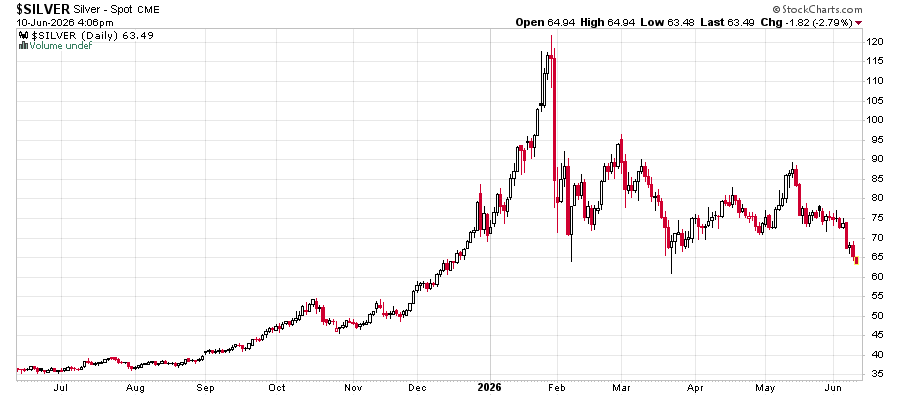
Apparently not:
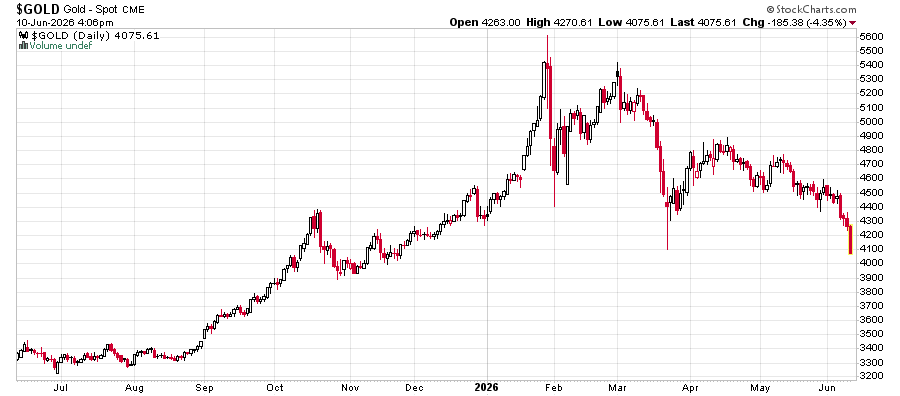
Gold and silver have been trading down, especially since the precious metals price spike last January. Somebody buying Silver at that $120 spike is sitting just under a 50% loss at present.

What do we make of these conflicting narratives?

Prices are set at the margins. It takes one trade for a price to drop from $100 to $10 – if somebody is willing to sell it at 10 dollars and nobody is willing to buy it between $10.01 to $100.

What triggers the sale? The need for liquidity – converting an asset class into cash, and this need is more than the desire of the purchasing party to pay up for it.

The advantage of owning an ounce of gold or silver is that it sits there. It doesn’t depreciate. It will be there forever, irrespective of whatever happens to the entire monetary system. The disadvantage is that it sits there. It doesn’t earn a yield. To convert this asset into something useful, you need to find somebody willing to take it and give you something in return for it that you want – typically cash. If too many people want cash, you’re less likely to receive more for it.

It is very difficult to predict the eddies and currents of when you will see demand for precious metals or seeing people needing liquidity and selling their gold and silver instead of US Treasuries or Bitcoin or shares of NVidia.

“Sell in May and Go Away” is a popular cliche in the markets – perhaps this year it is especially true. I continue to remain very defensively positioned despite the pain of seeing a USA CPI print of 4.2% and the best low-risk short duration ETF I can find on cash equivalents gives out a net of 2.6%. What will break first, the purchasing power of cash or the stock market?
Accord Financial – or why small finance firms are difficult to measure

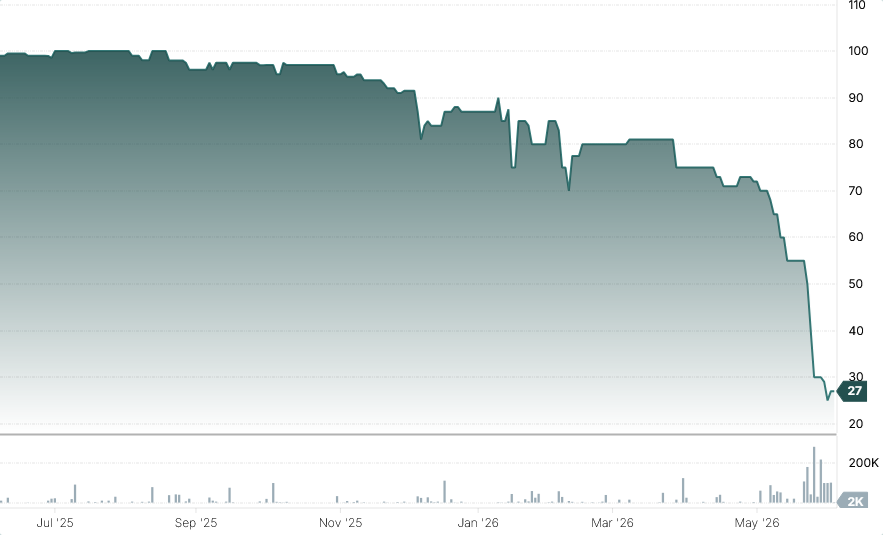
I noticed that the debentures of Accord Financial (TSX: ACD.DB) has fallen off a cliff:

There should have been a hint of what was going on earlier this year when they extended the debenture term and increased the coupon rate (to now 12%) but the firesale of assets has made it quite clear that the subordination of the public debentureholders is not placing them in a very good position to negotiate – let alone getting payment on maturity.

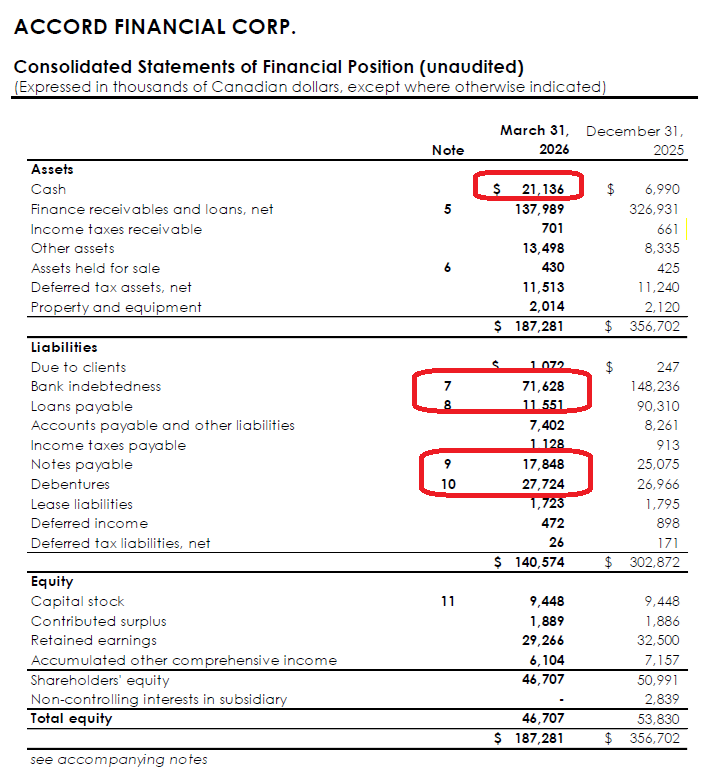
Is it really that much of a train wreck? Let’s quickly examine things. Their March 31, 2026 balance sheet:

We have $21M in cash, and $138M in “finance receivables”.

This is what is needed to pay off notes 7, 8, 9 and 10 (the debt capital used to issue the loans).

Note 8 is a non-recourse loan. Note 7 is the primary credit facility with the bank (extended to June 19, 2026… they’re doing things nearly in monthly increments, never a good sign!). Note 9 is for notes payable, linked with the maturity date of the bank loan from a related party (the related party keeping the corporate entity afloat… for now). Note 10 is the $20.65 million in publicly traded debentures and $5 million in non-listed debentures (same terms). They mature on July 31, 2026.

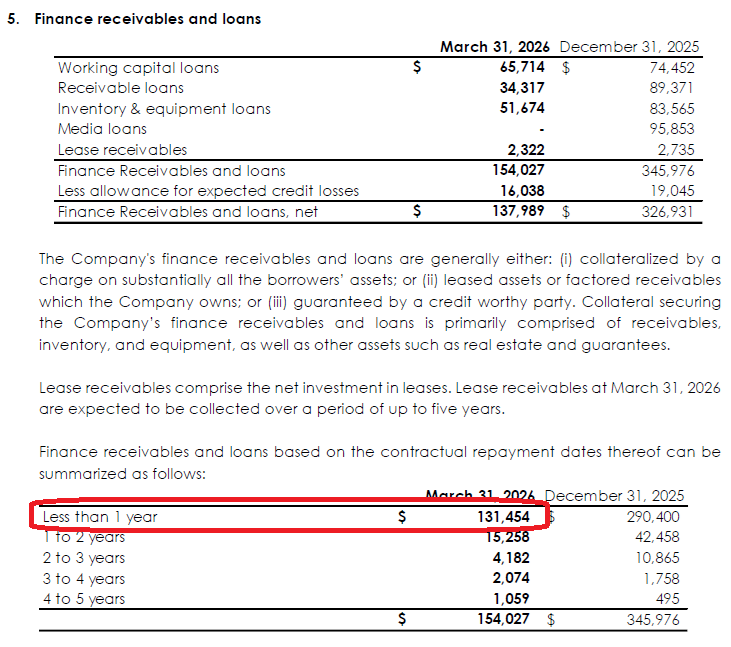
When doing the math, you have about $159M in financial assets that are going to pay off $127M in loans and debts. That’s nearly $30M leftover, so surely paying off those debentures is going to be no problem, right, right??

The finance receivables are the lion’s share of assets and they are primarily structured to within 1 year of repayment:

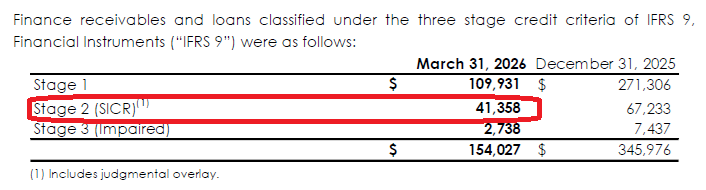
Looks good, right? What’s the issue?

SICR is a “significant increase in credit risk” measurement.

So it turns out that about $41 million in loans are at risk. This makes the threshold for repayment much more narrower. Coupled with the fact that the corporation is loss-generating (specifically the interest expenses and G&A is well higher than the interest income being generated by the loan portfolio), the trading price of the debentures is not surprising.

Finally… the irony wasn’t lost on me when looking at the first page of their quarterly report:

Canadian Preferred share market

I did another quick scan of the Canadian preferred share market.

Yields are very low. Many issues are trading above the $25 par level and ripe for calling (culling?).

The Canadian public market for individual fixed income issuers out there is getting quite thin. The publicly traded debenture market is also exhibiting moribund signs – 60 individual tickers and this is going to go down another six tickers quite soon with the extinguishing of ECN, and the former Slate Office REIT.

I am not inspired by what I am seeing out there.

The impact of rising long-term yields

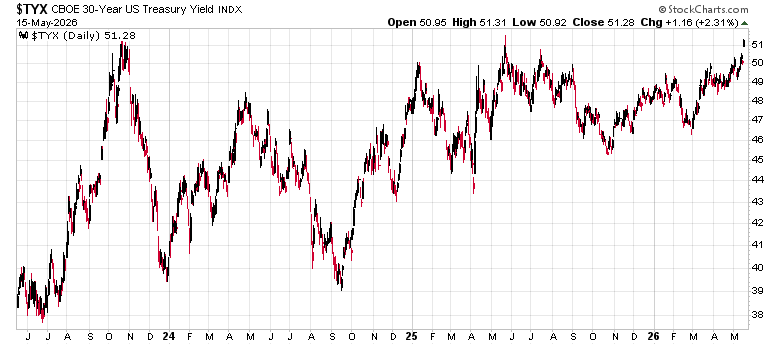
The rise in the 30-year US treasury bond yield post-Iran military action has been ominous:

What blows up when long-term US government bond yields go to 6, 7, 8%?

One answer – the purchasing power of cash.

Here’s the chicken and egg problem and this is what makes markets tricky.

A rise in the long-term risk-free (or let’s just say “so-called” risk-free rate as clearly risk-free is no longer without risk!) will result in the decrease in the capitalized value of future cash flows. This should depress equity valuations.

However, at some point, equities have a component of balance sheet value, which will maintain its value in real terms, but in nominal terms will increase in value over time, all things being equal. This especially applies to firms that have obtained their assets through non-floating rate debt financing.

So we have the yin and the yang of monetary debasement in action – future cash flows are worth less due in current dollars to rising interest rates, while asset values will rise in nominal terms.

Is there a value in holding cash when every day they purchase less in assets?

Possibly – but only when everybody has a rush for cash at the same time. Predicting when or if this happens is difficult.

What causes a rush for cash?

People needing to suddenly (key word – suddenly) make debt repayments or incurring expenses that need to be paid in short order. The perception that the assets in question are garbage and need to be dumped quickly.

When does this happen?

Covid-19 was a good example – nobody is working, everybody needs to raise money for insurance claims. Companies’ earnings will crater due to demand destruction.

9/11 was another example – massive insurance claims from disruptions triggers a need to raise cash immediately.

The 2008 economic crisis – the impending demolition of the financial system – raise cash!

There were obvious catalysts in these cases. What will trigger a need for cash in 2026?

With sudden amazement

The bipolar market continues – we have companies like Rocket Lab (RKLB) shooting up into the stars, presumptuously in anticipation of the SpaceX IPO, and companies like Sandisk rising by a factor of 20x over the past year.

Conversely, I am looking at most of the usual suspects in software being down for the day – ADBE, CSU, etc.

The war in the Middle East still continues and a good chunk of the world’s crude supply is still out of circulation. Every day that this continues is another layer of embedded cost in the real economy, which will take months for the ripple effects to show themselves. When the ripple effects show up in financial statements, many reactive algorithms will make adjustments accordingly.

I do note that many “traditional” names are fading away – Nike (NKE), Whirlpool (WHR), and LuluLemon (LULU) are depressed far below their traditional norms – are these brands going to be the Kodaks of this decade, where the foundation of the companies has essentially been hollowed out over time and not maintained? The only difference is that Kodak was a technology adaptation failure, while the three aforementioned companies are marketing brands, where shoes, washing machines and lifestyle clothing are less susceptible to wholesale technology changes rendering companies obsolete.

Conversely, from a broad market perspective, perhaps this is the market’s way of saying that the “death of money” is occurring – and claims on companies that produce goods and services is what is driving demand and not necessarily the quantity of earnings they derive from fulfilling such demand.

Despite having a huge cash fraction in the portfolio, my YTD is still better than the primary indexes. It’s a very odd situation in that I do not feel particularly satisfied with the performance even though objectively things from a risk-adjusted perspective can be considered borderline perfect. It’s difficult looking at these things that are going up 20x in a year like Sandisk and wondering why you don’t have one in your own portfolio. Even if you took a 2% position in the stock at the beginning, if it goes up 20x, it would balloon to 29%.