A basic guide on how to do Canadian equity research

Whenever I hear of a publicly traded company, I follow a fairly standard methodology to do some basic research on the firm.

In a perfect world, you try to do research before looking at the share price of the company. The whole idea of the research methodology is to pin down a valuation for the equity (or in some cases, debt) and seeing a stock price contaminates what should be an unbiased analysis. You want to come up with your own valuation, rather than looking at the market’s valuation and then thinking of ways to rationalize the stock price. Unfortunately 9 times out of 10, the first thing I do is pull up the stock quote. I’ve been trying to train myself to no longer do this, but it is really, really difficult to not see a quote attached to an article.

Once I am ready to research, I pull off these documents from SEDAR in this order:

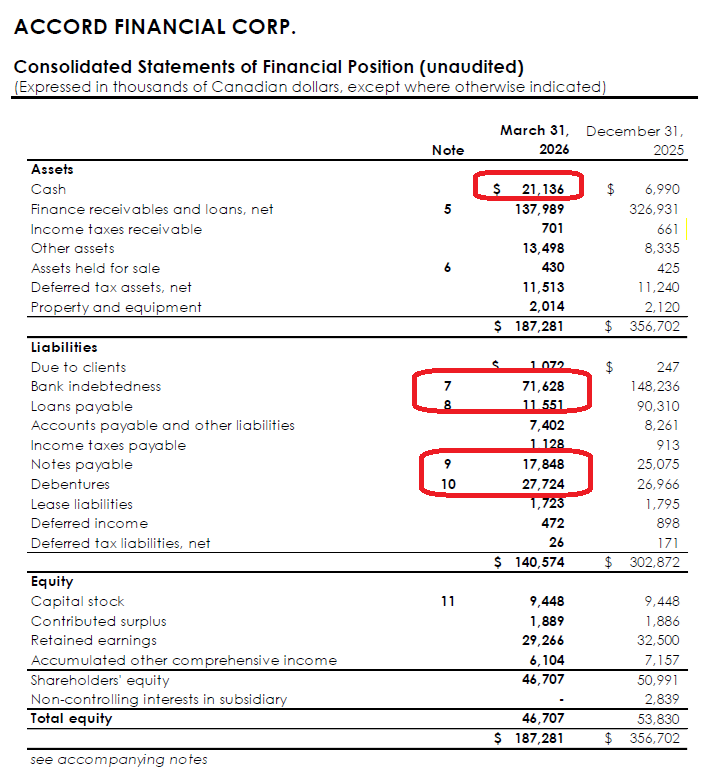
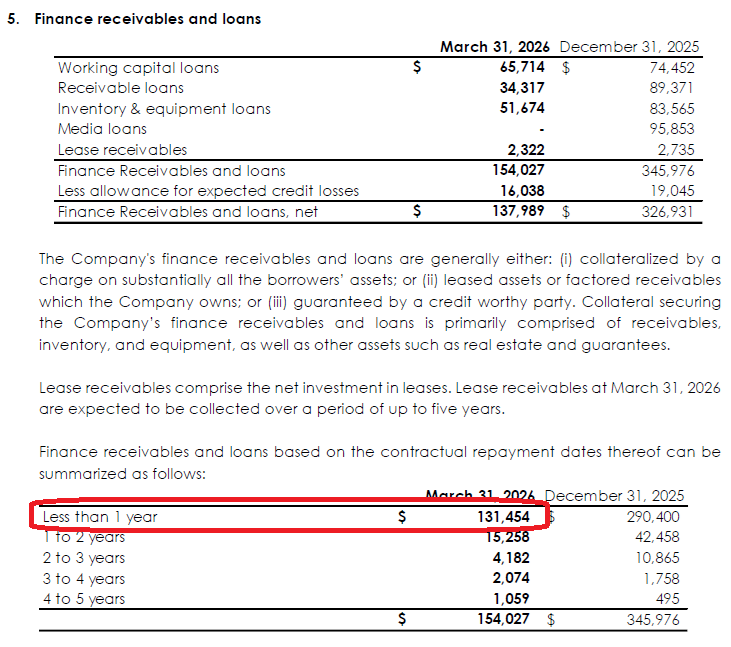
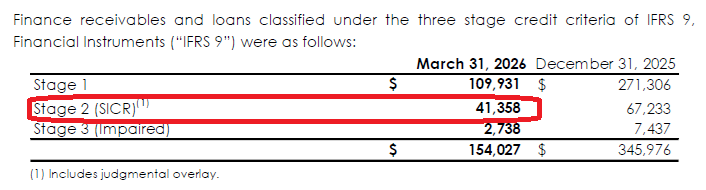
1. If the “nearest” financial report is an interim statement, I pull down the interim financial statements and MD&A document and read them. Doing analysis on this alone is time-consuming, and you look for tidbits in the statement, get an idea of how the company is capitalized and look at the cash situation. If the “nearest” report is an annual one, I read that and the MD&A.

2. Then I read the management information circular, and look at executive compensation scheme, insider ownership, and executive biographies and get a “feel” for who is running the firm, and who is on the board.

Usually by this point, you can come up with a ballpark number and then it becomes irresistible to look at the share price and hence valuation. Which then leaves:

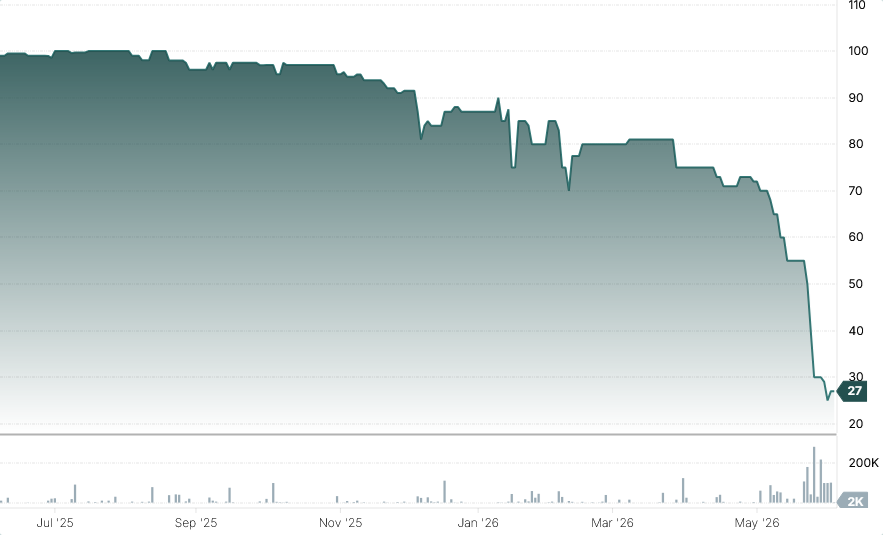
3. Pulling up the stock chart, and then looking at any significant price moves, and then connecting those price moves to various news releases of the company;

4. Reading every news release of the company over the past X years, chronologically, and then looking at the reaction of the stock to what is significant news;

5. Reading the latest annual report (not the glossy version, the dry financial version) with its MD&A, and/or the Annual Information Form, which is also a good document that has information that is not contained in the interim statements;

6. Insider trading is available on SEDI and can influence a decision. While insider selling is not necessarily a negative signal, whenever you see insider buying it gets your attention much more.

7. The company’s website.

Usually by this point you spent many hours of reading and synthesizing information, and should have a pretty good idea as to what makes the company “tick”. Then the next step is to have a sector-wide comprehension and start investigating competitors, and firms up and down the supply chain to get a feel for the economic variables at stake. This is a never-ending process and eventually at some point you cut it off and then make a buy/sell/leave alone decision.

Learning to prune investment candidates at stage #2 is a very good skill to have – I usually set price triggers on those companies, and when the triggers are hit, I get an email and this triggers me to take a second look at the company to see if anything has changed. In the second half of 2008, so many companies were triggering low price alerts that I had a very, very difficult time keeping up with what was literally an avalanche of securities. I probably could have performed better in 2008 had I had more time to look at all the securities that were flashing at me.

Today, there is hardly anything that triggers my low price alerts, so I am using different screens to put some companies on the research queue.

ING Direct gets into the chequing market

In an interesting corporate strategy shift, ING Direct is now getting into the chequing and bill payment market. The salient details are similar to the local credit union that I deal with, mainly no transaction charges and a nominal fee for other basic services (ordering cheques, writing bank drafts, etc.).

ING Direct used to start off as a basic business model where you can save your money at a high rate of return – ING Direct would then use this as collateral to write mortgages, and then make the money off the spread between the mortgage rates and the savings interest paid. As their deposit base grew, they eventually morphed from giving their clients the best rates available to just giving slightly above average rates for savings. They are now out-competed by Ally and other providers.

As there is nothing preventing competition for funds, the only barrier for customers to switch banks is simply to fill in an application form. Since the interest spread between ING Direct and Ally is 0.5% on short-term savings at present, it is a $50 difference on a $10,000 deposit for a year. While this is not a gigantic amount of money, it is likely worth it for those that can spend the 20 minutes applying and getting an account.

As for the chequing account, I was assuming that the funds you leave on deposit would be earning ING Direct’s typical interest rate on savings, but it is not – apparently the first $50,000 will earn 0.25%, and the remainder will be earning more. This is far below the 1.5% that ING Direct offers.

So what is the point of opening an account? Typically the convenience of opening such a chequing account would be that it works completely in synergy with your main ING Direct account, and offering the high rate while you keep your cash idle in the account. Instead, you still have to go through the same procedure to transfer over your money from the high rate account to the lower rate chequing account, and then make the cheque or bill payment.

I don’t think this is going to attract the type of clients that ING Direct wants, mainly those that keep large amounts of deposits in the account.

It is also interesting how most banks probably take a loss processing these accounts – the big money maker on the retail end are for mortgages, loans and credit card interest debt.

Bank of Canada Interest Rate Projections

Since the last 0.25% rate increase on July 20, the bankers’ acceptance futures have been quite calm. We have the following quotations:

Month / Strike Bid Price Ask Price Settl. Price Net Change Vol.
+ 10 AU 0.000 0.000 98.905 -0.005 0
+ 10 SE 98.825 98.835 98.825 0.000 1825
+ 10 OC 0.000 0.000 98.725 -0.005 0
+ 10 DE 98.700 98.710 98.700 0.010 6190
+ 11 MR 98.580 98.590 98.580 0.010 4636
+ 11 JN 98.460 98.470 98.460 0.010 2213
+ 11 SE 98.310 98.320 98.310 0.000 904
+ 11 DE 98.140 98.150 98.130 0.010 303
+ 12 MR 97.950 97.960 97.940 0.020 104
+ 12 JN 97.770 97.790 97.760 0.020 54

This still hints that the short term rate will rise 0.25% by the September 8 or October 20 meeting, and the short term rate will end the year at 1.00% with a possibility of 1.25%. For the year 2011, rates are expected to inch higher by about 0.5 to 0.75%.

It should also be noted that at present, 3-month corporate paper is yielding 0.89%. This was approximately 0.4% half a year ago.

Finally, since 5-year bond rates have dropped considerably over the same time period (which is counter-intuitive to the economics 101 texts that state that longer-term bond yields will rise with an increase in interest rates), 5-year fixed term mortgages should also drop – the best one I can see so far is 3.87%.

Menu Foods cashes out

Menu Foods is a manufacturer of pet food. They are most famous for an incident in early 2008 where some chemical got into their food supply through imported grain from China which was tainted and caused organ failures in pets. Although they were already on the financial skids in a very low-margin industry (they cut distributions to zero in 2005), this tainted food incident took down their share price down to abysmally low levels and presented a considerable financial risk for equity holders since the company was on the brink of insolvency.

They did manage to stage a partial recovery, but then the global economic crisis hit later in 2008 and early 2009, which brought the common shares once again around the 70-90 cent range.

Investors back then, buying equity, were taking an incredible risk, but it is one that has paid off for them – although the business produces cash flows today, it is slim and they have high leverage given the amount of cash they generate. Still, an investor taking the plunge at a dollar would have seen last Friday over a triple gain on their equity investment.

Today, they will be bought out for $4.80/unit, which if I was holding units, would be selling out with a smile on my face.

I remember looking at the company back in early 2008 and thought they were going to go bankrupt. I also did not put this firm on my candidate list during the economic crisis simply because there were so many other (more solvent) offerings on the market at the time.

Another example of yield chasing

Just after a week since I posted a review of Superior Plus, declaring that they probably would have to reduce their dividends in order to be financially sustainable, they announced their quarterly results today. Notably, they lowered expectations for 2010 due to warmer weather (and therefore less natural gas deliveries).

They also had the following snippet in their quarterly release:

- The financial outlook for 2010 has been revised to AOCF per share of $1.50 to $1.65 as a result of lower than anticipated second quarter results and a weaker than previously anticipated economic recovery for the remainder of 2010.

- The financial outlook for 2011 has been revised to AOCF per share of $1.85 to $2.05 as a result of a weaker than previously anticipated economic recovery forecasted for the remainder of 2010 and throughout 2011, particularly impacting Superior’s Construction Products Distribution business.

AOCF is “Adjusted operating cash flow”, which is a non-GAAP metric to approximate how much cash before capital expenditures is available to the corporation. Since their dividend rate is $1.62/share, this leaves the company little to negative real cash to provide for acquisitions (which they have done plenty of over the past couple years), debt repayment or capital projects.

The company’s stock traded down 7.9% as a reaction to their disappointing report.

Investors undoubtedly will be looking at Superior Plus’s 13.03% dividend yield and marvel what a bargain they are getting, but it seems likely they will be forced to reduce dividends and this is reflected in the market price.

Interestingly enough, Superior Plus has four issues of debentures that trade on the TSX – the issue maturing in December 2012 has a yield to maturity of 4.5%, while the issue maturing July 2017 has a yield to maturity of 5.9%. They appear to be priced very expensive and I would not touch them.

Dividend payouts is not a reliable financial metric

I note that Manitoba Telecom, a boring but profitable firm providing telecommunication services in Manitoba, released their quarterly results today with a dividend cut – from $2.60/share to $1.70/share, paid quarterly.

With 65 million shares outstanding, this amounted to a reduction from $169M/year to $111M/year.

Given its free cash flow, which is now estimated to be around $160-190 million, this is a rational decision by management because it will give the company some room to either build up cash reserves or de-leverage from its approximate billion dollar long-term debt balance.

The market took down the common stock from $27.32/share to $24.98/share. Part of this is due to the reduction in expected earnings, but also likely due to investors bailing out on the payout cut.

The important lesson for an investor is that you cannot just look at the dividend yield and assume it will be stable – the company must be able to make enough cash, plus enough for future capital expenditures and debt repayments, in order to justify that dividend. Ultimately, the dividend itself is a metric that is should only weakly associated with the proper valuation of an equity security.

Manitoba Telecom has been on my watchlist for ages, but I still do not find any compelling value in the stock. This is another classic case of yield chasers getting burned.

BC Lower Mainland Real Estate liquidity drying up

Skimming the Greater Vancouver Real Estate, and the Fraser Valley Real Estate statistics packages, it is not surprising in the least to see volumes decline in the July month-to-month comparisons.

The reason is very simple – the introduction of the HST and the threat of higher interest rates. While HST has an impact on new homes sold, the threat of higher interest rates also pushed demand forward. Even though short term interest rates have a smaller impact on the longer-term fixed rates than most people think, it is likely that most financially unsophisticated people would think that rates (at least in the short run) are going up, so they must “lock” their purchases in today.

Usually the opposite thinking works better – the best time to buy real estate are when interest rates are high – since real estate is a credit-driven market, one would surmise that once credit becomes more expensive, real estate demand would drop and subsequently prices would have to lower in order for transactions to proceed.

If the 50% reduction in sales reported is sustained for the following year, you are bound to see price reductions as people that need liquidity in the short-term will be forced to reduce their asking prices. The people that are not urgently seeking liquidity are more likely to sit on their high asking prices and not have a transaction occur.

In terms of sheer valuation (costs vs. income potential/rent savings), Vancouver real estate is by far and away an expensive option. I’ve already explained some other intangible components to the valuation, but one major pillar of real estate has been its “safety” perception by the local populace. Once the “real estate is safe and/or never loses value” mantra disappears, you remove one of the intangible components of demand in the market.

I do not foresee a collapse in the market like we saw in certain USA markets, but a protracted period of time where the price level does not move and/or a slow downturn in prices is likely in the cards.

Rogers Sugar announces 3rd quarter results

Rogers Sugar Income Fund announced their quarterly results yesterday. The operational performance is not relevant to this post, but rather the announcement of how they will be treating their distributions after 2010 is over:

Management of Lantic and the Board of Trustees of the Fund continue to work on a plan to convert from the current income trust structure to a more conventional corporate structure. This conversion is expected to be effective as of January 1, 2011, in order to allow the current Unitholders of the Fund to maximize the benefits of the current income trust structure. The current intention is to pay quarterly dividends of approximately $0.085 per share, in order to maintain cash dividends to shareholders of the converted structure at levels that would provide an after-tax distribution equivalent to that currently enjoyed by our taxable Canadian Unitholders. The amount of dividends paid following the conversion will be at the discretion of our Board, and will be evaluated quarterly and may be revised subject to business circumstances and expected capital requirements depending on, among other things, earnings and other conditions existing from time to time.

Currently the distribution rate is $0.46/unit of interest income. At yesterday’s closing price of $4.91/unit, this translates into a 9.37% yield. A $0.085/quarter dividend translates into $0.34/year, or a 6.92% dividend rate. This is also a 26% haircut from the current payout rate. This is relatively comparable to other businesses that are publicly traded and give out dividends representing most of the free cash flow of the corporation.

The following table is a before-and-after concerning a unitholder’s after-tax distributions in British Columbia, assuming the units are held in a non-registered account, using 2010 rates (which is a critical assumption of this model, 2011 marginal rates will be slightly different due to changes in the dividend tax credit):

After-Tax Income:
Income Range Marginal Rates $0.46 $0.34
Low High Income Dividends Income Dividend Difference:
$ - $ 35,859 20.06% -12.59% $ 0.368 $0.383 (0.0151)
$ 35,859 $ 40,970 22.70% -8.79% $ 0.356 $0.370 (0.0143)
$ 40,970 $ 71,719 29.70% 1.29% $ 0.323 $0.336 (0.0122)
$ 71,719 $ 81,941 32.50% 5.32% $ 0.311 $0.322 (0.0114)
$ 81,941 $ 82,342 36.50% 11.08% $ 0.292 $0.302 (0.0102)
$ 82,342 $ 99,987 38.29% 13.66% $ 0.284 $0.294 (0.0097)
$ 99,987 $ 127,021 40.70% 17.13% $ 0.273 $0.282 (0.0090)
> $127021 43.70% 21.45% $ 0.259 $0.267 (0.0081)

As we can see, the after-tax dividend post-2011 is slightly higher than the pre-tax income distribution for all income brackets.

Also, as I have written before, anybody holding income trust units (other than REITs) in their RRSPs and TFSAs should be moving them into their non-registered accounts at the beginning of 2011.

After-Tax: After-Tax:
Income Range Marginal Rates $0.46 $0.34
Low High Income Dividends Income Dividend Difference:
$ - $ 35,859 20.06% -12.59% $ 0.368 $0.383 (0.0151)
$ 35,859 $ 40,970 22.70% -8.79% $ 0.356 $0.370 (0.0143)
$ 40,970 $ 71,719 29.70% 1.29% $ 0.323 $0.336 (0.0122)
$ 71,719 $ 81,941 32.50% 5.32% $ 0.311 $0.322 (0.0114)
$ 81,941 $ 82,342 36.50% 11.08% $ 0.292 $0.302 (0.0102)
$ 82,342 $ 99,987 38.29% 13.66% $ 0.284 $0.294 (0.0097)
$ 99,987 $ 127,021 40.70% 17.13% $ 0.273 $0.282 (0.0090)
> $127021 43.70% 21.45% $ 0.259 $0.267 (0.0081)

Dog days of Summer

August is the month that the market (including myself) takes a break.

Thus, any action you see in the marketplace should be taken with a grain of salt.

I am in the camp that the next macroeconomic foot to drop will be related to the onset of inflationary pressure, but in order to see this you need a very spontaneous change of mentality amongst market participants that cash is something to be throw into assets, as opposed to cherished because of high uncertainty in terms of US government policy. There has been a lot of money throw into the economy, but the money has not been sloshing around – it has been saved up in the balance sheets of financial corporations. When this money eventually gets released, it will be ugly.

However, the bond market, where you can lend your money to the US government at 2.91% for 10 years, seems to say otherwise.

It is very difficult to predict exactly when this phenomenon will occur, or whether I am just another kooky market analyst that has no idea what he is talking about. There is one element that I think everybody can agree with – the sheer amount of government debt will be crippling unless if there is some sort of monetary inflation, whether now or later. It is very unlikely that the government will be repaying this debt with equal-value or deflated-value (i.e. higher purchasing power) dollars.

In the meantime, I continue to wait patiently and observe where the currents are going. My current answer is that the money is swimming to income-oriented securities and since my portfolio has been loaded with these since early 2009, I will be waiting for appropriate exit opportunities. Even after all of the investment managers turn off the autopilot switch on their portfolios when they return home this September, I don’t think it will be the end of the universe for fixed-income securities. This is fortunate since some positions are at the upper range of my price bands and I don’t want to needlessly dispose them in calendar year 2010 exclusively for tax reasons. Although taxation is important, it should not dominate the decision to sell a security above fair value.

Canadian mobile service market heats up

Rogers has just fired their own broadside with the introduction of another virtual mobile service, Chatr, which feeds off of their own phone network (very similar to Fido, another Rogers-owned company).

It is very obvious with their pricing structure, and the cities that they are in that they are strictly trying to wipe out Wind Mobile and/or Mobilicity off the face of the planet. What’s hilarious is that Wind Mobile has no spectrum license in Quebec (other than the Ottawa-Gatineau area), and Rogers/Chatr’s service offerings are identical to the locations offered by Wind Mobile – Vancouver, Edmonton, Calgary, Toronto and Ottawa. On Montreal, they stated:

“We’re working out some translation issues in Montreal, but it will very soon be our sixth market,” Chatr’s senior vice-president Garrick Tiplady said in an interview.

Translation issues indeed! More like “There’s no rush since our competition isn’t there!”

You can be sure as Wind Mobile expands to other cities and/or expands their coverage in their existing cities, that Chatr will come up with “service enhancements” to incorporate those areas into their own “home network” as well.

Their pricing plan is, for the most part, identical to Wind Mobile’s structure, with the most notable exception that on Rogers/Chatr’s $35 plan, they charge 25 cents to recover your voicemail, and they charge for incoming text messages.

Since the coverage areas between Chatr and Wind is nearly identical, I have no idea who would sign up to them.

As I stated in a previous post, the new entrants to the Canadian wireless market are not going to be making any money. The only reason why Rogers is doing any of this is to bankrupt Wind Mobile and Mobilicity – Rogers/Chatr’s offering adds absolutely no value whatsoever to the Canadian mobile marketplace other than wasting consumer’s time as they have yet another offering to review.