Trimming the long-term corporate debt position

Although not a huge fraction of my portfolio, I have trimmed some of my long-term corporate debt position in Limited Brands 2033 bonds, at a yield to maturity of 7.8%. I will be trimming more if the yield goes down to around 7.6%, and eliminate it entirely if the yield goes down to around 7.4%.

The risk-free rate (US government treasuries) for a 23-year maturity is about 4.5%, so the yield spread of 3.3% is not sufficient compensation in my eyes for the level of risk taken.

Limited Brands is a company that is in excellent shape after the 2008-2009 recession. They have about $2.7 billion in debt, compared to $1.8 billion cash on the balance sheet, and yearly free cash flow of about $900 million. Their “big name” store is Victoria’s Secret and they also operate Bath and Body Works. Although they have excellent prospects looking forward in terms of liquidity and solvency (and they have announced they will be giving out a $323M special dividend and a share buyback program, which is not good for bondholders although it speaks to the financial capability of the company to make such a move), I will lower my exposure to their debt as prices continue to rise and look elsewhere to get a better risk/reward ratio for my capital.

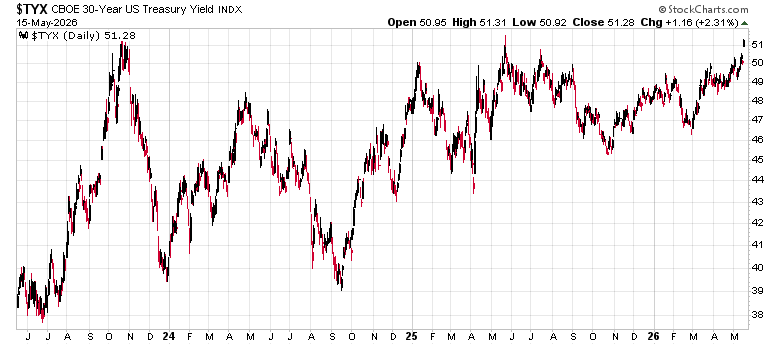
I think there is a good a chance as any of US bond yields rising considerably over the next few years, so this trade is also an adjustment with respect to my macroeconomic view of the world. It does lower the yield of my portfolio, but I am happy to keep the cash. It will stay as cash until such a time where I can determine where to deploy it in an efficient manner. Given what I see out of the markets, I don’t anticipate this will be a quick process.

Shaw Communications – Moving into Wireless

An article questions Shaw’s slow entry into the Canadian Wireless market.

RBC Capital Markets analyst Jonathan Allen said the delay gives other new competitors time to gain traction before Shaw is even in the market.

“It’s difficult to say whether Shaw launching with LTE is the right move,” Allen wrote in a research note, noting Shaw would be among the first globally to choose this network standard.

My opinion is less questioning – waiting is completely the correct decision. The reason is that there is no first mover advantage in this second expansion of the Canadian wireless domain. With incumbents (Telus, Bell and Rogers being the big three) having a dominant advantage in terms of size, capital and capability, it will be difficult for newcomers to quickly penetrate into the marketplace. My guess is that Shaw will be carefully looking at how Wind Mobile, Public Wireless and Mobilicity perform before doing their own launch.

In the strategic sense, Shaw must get into the wireless space – they have a huge customer base with their cable and internet services, but their expansion into the phone space has been slow, mainly because landlines are now obsolete. A wireless expansion that bridges the internet and voice service seems to be quite a logical move. Their system needs to be able to deliver enough reliable bandwidth to provide both voice and highspeed data service. They will also have the ability to bundle this with their cable packages, and as a result may have better success with market penetration than other providers.

In terms of valuation at a glance, Shaw’s equity appears to be fairly valued. I don’t see a compelling story that would boost their equity price dramatically – it would be an economic miracle if they doubled in five years from their current market capitalization of $8.1 billion. They also are capitalized by $4 billion in debt, supported by roughly $600 million of yearly free cash flow at present. Construction of a wireless network is likely to cost a lot more, so it remains to be seen whether they will decrease the dividend or raise more debt capital to finance it. Shaw does have the advantage of having their billing and customer support infrastructure established, which is something the other new upstart providers are struggling with.

As a company, I have always liked Shaw’s positioning and corporate direction. As an investment, I have never found them compelling. Their common shares will represent a good store of value in terms of their ability to drive cash flows from Canadian’s desire to receive cable and communication services, but I will not project much in the way of capital gains.

Why are mortgage rates going up?

I earlier stated that posted rates are irrelevant, but the change in them is somewhat more relevant. The change in mortgage rates, however, are dictated by the Canadian government bond market.

5-Year Canada Government Bond Benchmark Yield

As you can see, the 5-year government bond yield is at a high for the year – at 3.06%, it has not been this high since October 2008.

Today some of the major banks increased their posted rates to 6.1% from 5.85%. The best market rate you can receive today on a 5-year fixed mortgage, without going through too much hassle, is around 4.25%. This will likely go up to 4.5% soon.

Over the past 5 years, the peak for the 5-year benchmark government bond yield was 4.72% in the week of June 13, 2007. The posted bank rate then was around 7.3%, and a typical market rate on 5-year fixed rates would have been around 5.8%.

As government bond yields continue to increase, mortgage rates will also follow.

Chinese investing in Alberta Tar Sands

It’s making the news headlines that Sinopec, a Chinese “crown corporation” is taking ConocoPhilips’ 9% stake in Syncrude, for US$4.65 billion. This will put Syncrude’s valuation at around $52 billion.

Syncrude is a joint venture company with a strange ownership structure. They are one of the large tarsands miners in Alberta, right up there with Suncor.

What’s odd is that Canadian Oil Sands’ market capitalization is about $15.4 billion at this moment and they only have a billion dollars of long term debt. Canadian Oil Sands’ 36.4% valuation of Syncrude would be worth about $18.8 billion at the rate that Sinopec paid for their 9% stake. Obviously I might be missing something here in terms of valuation (not being able to access Syncrude’s financial statements would be an important part of this), but it seems like Sinopec might be overpaying.

China has accumulated a lot of cash (especially US currency) through exports and are concerned that it will be inflated away and are trying to find places to invest it. One way is through minority investments in other corporations, especially ones that serve the strategic purposes of the Chinese government.

Brokerage firms in Canada – Questrade Review

(Article updated January 4, 2011 to update margin rates and put in a current rate of interest.)

(Readers may also be interested in reading A Questrade Failure [January 4, 2011], and Watch out for Questrade – Check those statements [February 16, 2011].)

I reviewed Interactive Brokers previously; I use them for my non-registered investments. For my RRSP and TFSA, and for TSX-traded debentures, I use Questrade.

Questrade

I transferred in my RRSP to Questrade in early 2008 from BMO Investorline. The primary attracting feature was the ability to retain US dollars in the account and not having to incur currency exchange fees whenever you transacted in US securities. Just as an example, ignoring commissions, if you bought USD$1000 of something, and then sold it the next day, you would probably pay around $40 of implied currency conversion charges at BMO Investorline. With Questrade, this is nothing, assuming you had the US currency in the account to begin with.

If you bought USD$10,000 of something and sold it the next day, your typical currency conversion charges (going from CAD to USD and USD to CAD) would be around $400 – with Questrade, it is nothing. For anybody transacting in US dollar securities in their RSP, it is an essential feature.

The RSP transfer took about a month. It also took them another couple months to refund the RSP transfer fee, but they explained this up-front.

The web-based interface for Questrade is very simple – it is missing a basic feature of “how much will this entire transaction cost” whenever previewing an order, but other than this, it is OK. The problem is mitigated by using a desktop calculator. They provide a better platform for active traders, but I have never used it and probably never will. They provide three separate logins for account information and trading, but once you’ve bookmarked them, it is surprisingly easy to get detailed access to your information. In particular, their clearing is performed via the Pension Financial Corporation, and the historical account information they provide through this interface is comprehensive. I can easily see how people that are not as “in-tune” with web navigation would find this system very confusing.

Costs at Questrade are very cheap – basically a trade costs $1 per 100 shares, minimum of $5, maximum of $10. They are also the cheapest Canadian broker to trade TSX-traded debentures – basically the standard commission charges (as if you were trading stocks) applies – so it would be about $10/trade. Most other brokerages charge around $40 per trade, plus $1.50 per $1000 par value – which could make trades very expensive. Questrade does not charge any inactivity fees or any other “garbage” fees, but something people should be aware of are fees for taking liquidity away from the market (i.e. buying at the ask, or selling at the bid) which would amount to material sums if you are dealing with penny stocks.

Questrade’s margin rates currently (as of January 4, 2011) are 4.5% for Canadian dollars, which is prime plus 1.5%. They generally are in line with other “big name” brokerages (e.g. BMO Investorline is at 4.25% or prime plus 1.25%), but both do not come close to Interactive Brokers.

I have no problems with Questrade customer support – they have an online web-chat interface and sometimes it takes awhile to get a customer support agent, but once you do get on with them, they are fairly responsive. I suspect most of the people that have complained about Questrade (and there are a lot of financial forums that have supremely negative reviews on them) didn’t have a clue what they were doing (e.g. dealing with Canadian vs. US dollar securities, or wondering why their shares got sold out when they had a margin call).

Deposits and withdrawals are simple – provide the EFT information, and a few button clicks is what it takes to fund accounts or withdraw funds from accounts. The withdraws typically take three business days to process, and I have always received my funds promptly.

For a simple buy-and-hold investor, Questrade seems to be a decent and low-cost provider. They aren’t going to win any awards for any of the other ancillary services brokerages provide (research, fancy interface, hand-holding customers), but if you don’t care about those, they serve the job very adequately for RRSP and TFSA accounts. I have no idea how they are for active traders.

Questrade’s inadequate security

The reason why I can’t give a blanket endorsement of Questrade is security – they do not offer any sort of guarantee (e.g. BMO Investorline’s Online Security Guarantee) against hackers, and unlike Interactive Brokers, if somebody managed to rip off your username and password, they can do a lot of financial damage to your account. This is my biggest concern with Questrade, and it is a sufficiently high concern that I wish they would offer some sort of guarantee against hacked accounts, and/or provide an account authentication system that is similar to Interactive Brokers. In addition, Questrade is privately held and as a result, one has no idea how financially solvent they are. Although Canadian investors are protected through CIPF, you do not want to have to reclaim your assets through this mechanism.

The reader might wonder why I am concerned about an issue that has not materialized for me – I am very cognizant of potential risks. I do not want to have to suffer through a security incident before taking measures that will protect me. I do not believe Questrade takes security seriously enough beyond the typical lip service of telling its customers to “run a firewall and a virus scanner” and as a result, some of its customers will have their accounts compromised. Although I am very computer-savvy and it is unlikely that a phishing scam will get my username and password, it could happen and I want a form of protection beyond a username/password combination to make sure that my account is protected. Questrade does not offer this.

Until they provide better provisions with respect to account security and provide some more transparency on their own financial solvency, I only will give them a tepid recommendation. The only reason why I use them is they support RRSP/TFSAs well and they allow inexpensive trades on TSX-traded debentures. If they beefed up their security, I would rate them much more highly than present. I just don’t get that warm and fuzzy secure feeling that I do with Interactive Brokers.

Unlike practically all other financial blogs out there, I won’t insult you (the reader) by offering some referral scheme, which they do offer – I do these reviews without remuneration.

Geopolitical risks of foreign operations

Kyrgyzstan is a country that probably was on nobody’s radar before a few days ago when the country went into a revolution.

However, some companies have operations in Kyrgyzstan – Centerra Gold has mining operations located there and correspondingly, their stock price took a drop with the heightened uncertainty:

Whenever having an investment interest in a Canadian-headquartered company with foreign operations, it always pays to keep an eye on the country where the operations are located. I am reasonably sure that if somebody was paying attention to Kyrgyzstan before their revolution hit the news, they could have protected their investment interests.

Vancouver Moneyshow / Financial Forum

I try to make the effort to go out to the annual Vancouver Financial Forum, usually held at the Vancouver Convention Centre (where the Pan Pacific Hotel is on Waterfront). This year, apparently the conference was acquired by another company and is now re-branded as the Vancouver Moneyshow and was held at the Hyatt on Burrard Street.

The reason why I try to show up to this is because I have found it to be a rather uncanny barometer of investment sentiment, and what the “strategies of the day” tend to be. As a result, I know what to stay away from for at least the next year. I consider it to be more entertainment than anything else, although occasionally you will get some corporate swag that is actually useful.

The themes to avoid this time around seem to be heavily concentrated on gold and silver (both bullion and mining ventures), and also real estate limited partnerships.

So this year, I would like to thank the two ladies at the booth of Vale Corporation, who gave me a steel thermos. Considering I never heard of the corporation before, I much later realized that the reason why the two ladies had Latin American-sounding accents is because the company is headquartered in Brazil, and does about $30 billion in revenues a year in the mining industry.

There were a few other large-cap companies that showed up, including Proctor and Gamble, Cemex, National Bank and a couple others. I truly believe the only reason why they show up to these things is to get some vacation time out in Vancouver, although the weather this time of year was pretty rainy and windy and not hospitable.

I enjoy listening to bad investment pitches, and about half of them I classify as bad, so it takes a bit of cherry picking and research to determine which is the worst of the worst. To protect the guilty I will leave out the specific names of the companies involved.

There were three “trading schools” that had tables. One of them in particular, had a 5-day training course which you could pay $4000 for, and they give you a live account to trade 100 share lots of Apple or some stock of the day with using technical indicators they train you with. They then explained you could take the course as many times as you want with no charge, and that they train their people to do around 60 to 80 trades a week. They also said their classes have 21 people and despite them trading furiously in training, they collectively don’t lose more than around $200. I found that tough to swallow. I liked their marketing front, however – one guy and three attractive women – it implied “Want to meet women? Sign up to trading school!”. Fortunately as I left the table, I still had my wallet with me.

There were plenty of real estate “opportunities”, ranging from commercial real estate to residential apartment investing. They typically pitched a limited partnership format. One of them, which I thought was particularly atrocious, was pitching a limited partnership that proposed redeveloping a strip mall in northeastern Edmonton. The partnership would then acquire the property from a related party through a leveraged buyout (this is where the promoters truly make their ‘money’ even if the underlying project fails), the limited partners get a substantial tax-loss writeoff in the first year, and then they very patiently have to wait many, many years for payback (i.e. 2022). A great deal for them – get your money today, and maybe give it back to your investors 12 years later.

When asking the guy “So, let’s pretend I have $25,000 in my wallet, why should I invest in you guys than Rio-Can?” and the salesguy basically gave three minutes of speech about how great their property is, and how they are not exposed to “market risk” like Rio-Can is… I did say this was entertaining, right?

The companies providing charting services were also equally amusing, although they have been a mainstay at the financial forum – charts that can produce the fanciest lines and do a wonderful job of extracting value out of historical data, but with no predictive value whatsoever.

For the first time, I’ve noticed a few firms trying to get into the fundamental data analysis sales business, but the companies were relatively uninspiring. The worst of them pretty much copied all the information out of a company’s annual information form and just put it in a research report with some very bland extrapolations of their financial status in a typical research report.

I truly wonder how many people that go to these things actually think the information they receive at these forums can be acted upon with real money.

Athabasca Oil Sands IPO – First day of trading

The first day of trading of Athabasca Oil Sands resulted in a 6% drop in valuation from $18 to $16.90. I had written about my quick researched valuation of the IPO in a prior post, and also said that I wouldn’t be surprised if there was a post-IPO “bump”:

Once this company does go public it would not surprise me that they would get a valuation bump, and other similar companies that already are trading should receive bumps as a result. I have seen this already occur, probably in anticipation of the IPO.

If you had to invest into Athabasca Oil Sands and not anywhere else, I would find it extremely likely there will be a better opportunity to pick up shares post-IPO between now and 2014.

This kind of surprised me in light of the fact that this was much touted by the media before it started trading and it was appearing as if there would be droves of retail investors that would pile into the stock (before it went down). Instead, it just went down from the start of trading:

Probably what will be even more affected by this drop in valuation is the valuation of other related oil firms, which might get sold off now that the hype has been extinguished.

Inevitably, Athabasca Oil Sands will be running net operating losses for the next four years, so investors will have to be very patient before they will see any dividends coming from their common equity.

Investment returns must be calculated after-tax

One critical consideration of computing returns is that pre-tax is an easy calculation, but after-tax involves a bit more effort.

In Canada, interest income (and distributions of income from trusts) is taxed at your marginal rate. Foreign dividends are also taxed at your marginal rate. Dividend income from publicly traded Canadian companies are taxed at a very favorable rate. Capital gains are taxed at half your marginal rate.

As a result, portfolios should be structured such that income is maximized in sheltered vehicles (RRSPs, TFSAs) while Canadian dividends and capital gains are preferentially outside the RRSP and TFSA.

Your marginal rate depends on what province you live in and also what income bracket you are in.

So if you live in British Columbia, and make a taxable income of $50,000, your marginal rate rate on an extra dollar of interest income would be 29.7%. So to realize a 10% after-tax return on investment, you need to earn 14.2% on a pre-tax basis. Alternatively, you could also earn a 11.7% return via capital gains, or a 10.1% return via eligible dividends. It all amounts to the same: a 10% after-tax return.

The following tables are a simple illustration of the required pre-tax returns required to achieve a 10% after-tax return:

BC 2010 Tax Rates 10% after-tax equivalent
Marginal Cap. Eligible SB
Low Range High Range Rate Gains Dividends Dividends
$ - $ 35,859 12.5% 11.1% 8.9% 10.4%
$ 35,859 $ 40,970 12.9% 11.3% 9.2% 10.8%
$ 40,970 $ 71,719 14.2% 11.7% 10.1% 11.9%
$ 71,719 $ 81,941 14.8% 11.9% 10.6% 12.5%
$ 81,941 $ 82,342 15.7% 12.2% 11.2% 13.3%
$ 82,342 $ 99,987 16.2% 12.4% 11.6% 13.7%
$ 99,987 $ 127,021 16.9% 12.6% 12.1% 14.3%
$ 127,021 and above 17.8% 12.8% 12.7% 15.1%
BC 2010 Tax Rates 10% after-tax equivalent
Marginal Cap. Eligible SB
Low Range High Range Rate Gains Dividends Dividends
$ - $ 35,859 12.5% 11.1% 8.9% 10.4%
$ 35,859 $ 40,970 12.9% 11.3% 9.2% 10.8%
$ 40,970 $ 71,719 14.2% 11.7% 10.1% 11.9%
$ 71,719 $ 81,941 14.8% 11.9% 10.6% 12.5%
$ 81,941 $ 82,342 15.7% 12.2% 11.2% 13.3%
$ 82,342 $ 99,987 16.2% 12.4% 11.6% 13.7%
$ 99,987 $ 127,021 16.9% 12.6% 12.1% 14.3%
$ 127,021 and above 17.8% 12.8% 12.7% 15.1%

The following is for an 8% after-tax return:

BC 2010 Tax Rates 8% after-tax equivalent
Marginal Cap. Eligible SB
Low Range High Range Rate Gains Dividends Dividends
$ - $ 35,859 10.0% 8.9% 7.1% 8.3%
$ 35,859 $ 40,970 10.3% 9.0% 7.4% 8.6%
$ 40,970 $ 71,719 11.4% 9.4% 8.1% 9.5%
$ 71,719 $ 81,941 11.9% 9.6% 8.4% 10.0%
$ 81,941 $ 82,342 12.6% 9.8% 9.0% 10.6%
$ 82,342 $ 99,987 13.0% 9.9% 9.3% 11.0%
$ 99,987 $ 127,021 13.5% 10.0% 9.7% 11.4%
$ 127,021 and above 14.2% 10.2% 10.2% 12.1%

The kiss of death – a mention in Forbes Magazine

I notice with amusement an article in Forbes – “Five Canadian Trust Survivors“, where the author basically states the following will still give out “solid” distributions after distributions are taxed in 2011:

Baytex Energy Trust (BTE.UN)
Cineplex Galaxy Income Fund (CGX.UN)
Vermilion Energy Trust (VET.UN)
Brookfield Renewable Power Fund (BRC.UN)
Keyera Facilities Income Fund (KEY.UN)

There is only one good that can come out of this article: it saves you the time from having to bother even looking at these companies. Just scratch them off your candidate list – if Forbes magazine is extolling the virtues of these companies, then it is a virtual guarantee that you are likely to be paying fair (if not greater than fair) value.

I wonder how many people actually base their purchase decisions on magazine articles such as these.

I have spent the greater part of the day trying to screen income trusts, and I don’t see any exceptional value out there. The only one (and literally one out of the forty or so that I took a detailed look at) stinks so badly that even I have no idea how their business can be made viable, but at least their market valuation is trading such that they think this company is going out of business really soon.